Sitecore vs WordPress: Which CMS is Best for Your Business?
Compare Sitecore and WordPress to determine which CMS aligns best with your business goals and requirements

Choosing the right CMS for your enterprise is more than a technical decision—it's a strategic one that impacts how your team works, how quickly you can adapt to market changes, and how effectively you connect with your audience.
In the enterprise CMS landscape, WordPress stands as the proven all-rounder—flexible, powerful, and trusted by organizations worldwide. Sitecore positions itself as the enterprise-focused platform with integrated marketing capabilities and personalization features.
Both platforms serve enterprise needs, but they take fundamentally different approaches. In this guide, we'll compare these two CMS platforms across the metrics that matter most to enterprise decision-makers, helping you determine which solution aligns with your business goals and technical requirements.


What is Sitecore?
Sitecore is a proprietary content management system that combines content management with integrated digital marketing tools and analytics. Launched in 2001, it's designed for large organizations that require advanced customization and the ability to personalize user experiences at scale. Sitecore helps marketers and technologists collaborate on a single platform to strengthen customer connections through features like real-time personalization, automated marketing campaigns, and the Experience Database (xDB) for collecting customer interaction data. However, Sitecore has a fairly steep learning curve, which can require significant training and resources to manage effectively. Additionally, Sitecore's licensing and implementation costs can be prohibitively expensive, especially for smaller enterprises or those with limited budgets.



What is WordPress?
WordPress is a highly flexible and user-friendly open-source CMS that has established itself as the dominant player in the CMS market since its launch in 2003. As an open-source platform, WordPress provides unlimited customization possibilities through its extensive ecosystem of themes and plugins. It's renowned for its ease of use, performance capabilities, and robust community support. WordPress caters to large enterprises, major media publishers, and eCommerce brands, offering the flexibility to build everything from straightforward corporate sites to complex, high-traffic digital properties. The platform's strength lies in its balance of power and accessibility—non-technical teams can manage content efficiently through its intuitive interface, while developers can extend and customize functionality to meet sophisticated enterprise requirements.

Sitecore vs WordPress Overview
At their core, these platforms represent different philosophies in enterprise content management.
Sitecore is a proprietary, all-in-one platform that tightly integrates content management with digital marketing capabilities. It's built specifically for enterprises that need advanced personalization and centralized marketing automation—all within a single system.
WordPress takes a modular, open-source approach that emphasizes flexibility and choice. Rather than bundling marketing tools into the core platform, WordPress allows organizations to select and integrate best-of-breed solutions for their specific needs. This approach offers greater flexibility in tool selection, easier team adoption, and significantly lower total cost of ownership.
WordPress vs Sitecore: Understanding the Differences
WordPress operates as an open-source platform with no licensing fees, offering unlimited customization through its vast ecosystem of 12,000+ themes and 59,000+ plugins. This creates a lower barrier to entry and allows organizations to scale their investment as their needs grow.
Sitecore follows a proprietary model with subscription-based licensing and costs that scale with usage and features. While it offers powerful integrated marketing capabilities, these come at the expense of flexibility in vendor selection and significantly higher implementation and maintenance costs.
For enterprises seeking cost efficiency, rapid deployment, and the flexibility to choose their own marketing technology stack, WordPress typically offers a more practical path forward.
Usage Trends: Sitecore vs WordPress
The market has spoken clearly on which platform enterprises prefer for their content management needs.
As of 2025, WordPress remains the leading CMS globally, powering 43.5% of all websites. Its dominance is particularly evident in the enterprise sector, where it supports 36% of the top 1 million websites by traffic.
Sitecore, in contrast, is used by less than 0.1% of all websites whose CMS is known. It powers approximately 20,000 websites and roughly 0.47% of the top 1 million sites by traffic.
This trend tells an important story: despite Sitecore's enterprise focus and integrated marketing capabilities, the vast majority of organizations—including Fortune 500 companies—choose WordPress for their content management needs.
The Qualities of an Ideal Enterprise CMS Solution
Before diving into detailed comparisons, let's establish the criteria that matter most for enterprise content management.
- Easy to Use: The CMS should feature an intuitive interface that allows users of all skill levels to manage and publish content efficiently, enhancing productivity and reducing reliance on specialized staff.
- Customizable and Flexible: It should offer extensive customization options to adapt the platform to specific enterprise workflows and branding requirements, including APIs for seamless integration with various systems.
- Highly Secure: Security is non-negotiable for enterprises handling sensitive information. The CMS must include advanced security features like robust authentication methods, data encryption, and frequent security updates.
- Superior Performance: The platform must ensure fast loading times and the ability to handle large volumes of traffic without downtime, utilizing tools such as caching and content delivery networks (CDN).
- Scalable: The system should grow with your enterprise, accommodating increases in content, traffic, and users without compromising performance.
- SEO and Marketing-Friendly: The CMS should support SEO best practices and integrate easily with your marketing technology stack.
- Active Community and Support: A robust support network is essential for resolving issues and accessing ongoing platform improvements.
Evaluating both platforms against these criteria reveals which solution better serves enterprise requirements without unnecessary complexity or cost.
Open-Source vs Proprietary Systems: WordPress and Sitecore
The choice between open-source and proprietary software fundamentally shapes your platform's flexibility, cost structure, and long-term viability.
WordPress operates as open-source software, meaning its code is publicly available for anyone to use, modify, and distribute. This creates several advantages: no licensing fees, unlimited customization possibilities, and a global community of developers continuously improving the platform. Open-source also means vendor independence—you're not locked into a single company's roadmap or pricing decisions.
Sitecore follows a proprietary, closed-source model with subscription-based licensing. While this provides professional support and a polished experience, it also means you're dependent on Sitecore for updates, security patches, and feature improvements. Customizations often require specialized Sitecore developers, and your organization is subject to Sitecore's licensing terms and pricing changes.
For enterprises, these differences translate to practical considerations around budget predictability, customization capabilities, and long-term platform sustainability.
Quick Comparison of Sitecore vs WordPress
Here's how these platforms compare across the most critical enterprise requirements:
| Criteria | WordPress | Sitecore |
|---|---|---|
| Type of CMS | Open-source, modular platform | Proprietary, integrated platform |
| Market Adoption | 43.5% of all websites, 36% of top 1M sites | <0.1% of all websites, 0.47% of top 1M sites |
| Licensing Model | Free and open-source | Subscription-based with usage tiers |
| Performance & Scalability | High performance with enterprise hosting (WordPress VIP); scales to billions of page views | Built for enterprise scale; requires specialized infrastructure |
| Security | Open-source security with global community monitoring; regular updates and security plugins | Proprietary security; vendor-dependent updates |
| Ease of Use | Intuitive interface; minimal training required | Steep learning curve; requires significant training |
| Developer Experience | Extensive APIs; vast developer community; abundant resources | Specialized development required; smaller developer pool |
| Content Management | Gutenberg block editor; streamlined publishing | Content management with integrated marketing features |
| Design & Customization | 12,000+ themes; 59,000+ plugins | Custom development typically required |
| Cost Efficiency | Low total ownership cost; no licensing fees | High licensing and implementation costs |
| SEO & Performance | Extensive SEO plugins; optimized for performance | Built-in SEO features; requires technical expertise |
| Support & Community | Massive global community; professional services widely available | Professional vendor support; smaller specialized community |
Sitecore vs WordPress: Full Comparison
Let's examine how these platforms perform across the critical areas that impact enterprise operations.
1. Ease of Use and Setup Process
WordPress is renowned for its user-friendly interface, which is intuitive and straightforward. The WordPress dashboard is clearly organized, facilitating easy navigation and content management. Most team members can begin publishing content within hours of training, and the visual Gutenberg block editor makes creating complex layouts simple without coding.
Setup is equally straightforward. With managed WordPress hosting or WordPress VIP, you can have an enterprise site operational within weeks rather than months.
Sitecore offers a more complex interface that provides robust functionality tailored for digital marketers and large enterprises. However, this sophistication comes at the cost of usability—the platform can be overwhelming for new users without a technical background. The learning curve is significantly steeper, and Sitecore implementations typically take months, requiring dedicated development teams and comprehensive training programs.
Verdict: WordPress delivers immediate productivity through its intuitive interface and quick deployment, while Sitecore requires substantial training investment and longer implementation timelines.
2. Customization and Flexibility
WordPress is celebrated for its vast customization options through themes and plugins. You can easily modify both the aesthetic and functional aspects of your website by choosing from over 12,000 free themes and 59,000 plugins.
This extensive ecosystem enables everything from simple design tweaks to adding complex functionalities like eCommerce, advanced SEO, security enhancements, and marketing automation. WordPress's modular architecture means you can select best-of-breed solutions for each requirement.
Sitecore offers robust customization capabilities, including advanced content management features and the xConnect framework for data integration. However, implementing these features typically requires more time, resources, and professional expertise. Customizations often mean custom development rather than configuration, which increases both cost and complexity.
Verdict: Both platforms offer customization, but WordPress provides greater flexibility through its modular ecosystem, allowing organizations to build solutions that precisely match their requirements without the high costs of custom development.
3. Team Management and Collaboration
WordPress offers intuitive team management through its built-in user roles and permissions system. Administrators can easily assign roles like Administrator, Editor, Author, Contributor, and Subscriber, each with appropriate capabilities.
For more sophisticated workflows, plugins extend WordPress's collaboration capabilities with features like editorial calendars, approval workflows, and content scheduling. Multi-site management is particularly strong in WordPress, allowing enterprises to manage multiple properties from a single installation.
Sitecore provides enterprise-focused collaboration features including workflow management and granular permissions. However, configuring these features requires technical expertise, and the complexity of Sitecore's interface can slow content teams.
Verdict: WordPress balances collaboration features with usability, enabling teams to work efficiently without extensive training. Sitecore offers sophisticated workflows but at the cost of complexity and steeper learning curves.
4. Plugins and Extensions
WordPress boasts the most extensive plugin ecosystem in the CMS world, with over 59,000 plugins covering virtually every enterprise requirement. Need advanced SEO? Yoast and Rank Math offer comprehensive solutions. E-commerce? WooCommerce powers millions of stores. Security? Wordfence and Sucuri provide enterprise-grade protection.
This massive ecosystem means solutions exist for most business needs without custom development.
Sitecore offers a more limited marketplace of modules and extensions. Many Sitecore implementations require custom development rather than leveraging existing extensions, which increases both cost and time-to-market.
Verdict: WordPress's extensive plugin library provides immediate solutions for most enterprise requirements, while Sitecore's limited ecosystem often requires custom development, increasing costs and implementation timelines.
5. Integrations with Third-Party Services
WordPress excels at third-party integrations through its extensive plugin ecosystem and well-documented APIs. Need to integrate with Salesforce, HubSpot, Marketo, or other enterprise platforms? Plugins exist for most major systems, and WordPress's REST API makes custom integrations straightforward when needed.
The platform's popularity means most SaaS vendors provide WordPress integrations as a standard offering, ensuring you can connect your CMS with your broader technology stack without extensive custom development. Common integrations include:
- CRM Systems: Salesforce, HubSpot, Microsoft Dynamics
- Marketing Automation: Marketo, Pardot, Mailchimp, ActiveCampaign
- Analytics: Google Analytics, Adobe Analytics, Mixpanel
- E-commerce: Shopify, WooCommerce, BigCommerce
- Social Media: Automatic posting, social listening, engagement tools
This ecosystem approach means you can select best-of-breed solutions for each business function rather than accepting a vendor's bundled offerings that may not meet your specific requirements.
Sitecore offers APIs for integrating with third-party services, but integration typically requires custom development work by specialized Sitecore developers. While Sitecore can integrate with major enterprise platforms, these integrations are often more complex and expensive to implement compared to WordPress's plugin-based approach.
Sitecore's integrated marketing features mean less need for some third-party integrations, but this also creates vendor lock-in—if Sitecore's built-in tools don't meet your needs, replacing them requires significant development work rather than simply switching plugins.
Verdict: WordPress's plugin ecosystem and strong APIs make integrations faster and less expensive, while Sitecore typically requires custom development for third-party connections.
6. Security Features
WordPress maintains high security standards through its active community and transparent development process. Regular updates to the core platform, combined with security plugins like Wordfence and Sucuri, help safeguard against vulnerabilities.
The open-source model means thousands of security researchers worldwide continuously examine WordPress code, quickly identifying and reporting vulnerabilities. When security issues are discovered, patches are typically released within hours or days.
Sitecore, as a proprietary platform, offers built-in security measures including advanced user authentication and protection against threats like XSS and SQL injection. Sitecore's integrated security features are robust out of the box, and the closed-source model means security through obscurity—fewer attackers are familiar with Sitecore's codebase.
However, Sitecore's closed-source model also creates limitations. Security vulnerabilities can only be identified and patched by Sitecore's internal team, potentially slowing response times compared to WordPress's global community. Organizations are entirely dependent on Sitecore's update schedule and must apply patches according to Sitecore's timeline rather than having flexibility in how vulnerabilities are addressed.
Verdict: Both platforms offer strong security when properly maintained. WordPress benefits from collaborative security efforts and rapid response times, while Sitecore offers integrated security but with potential delays in vulnerability responses due to its closed-source nature.
7. Performance and Scalability
WordPress, when hosted on enterprise-grade solutions like WordPress VIP, delivers exceptional performance that matches or exceeds any enterprise CMS. WordPress VIP is engineered specifically for high-traffic sites, leveraging advanced caching, global CDNs, and specialized infrastructure.
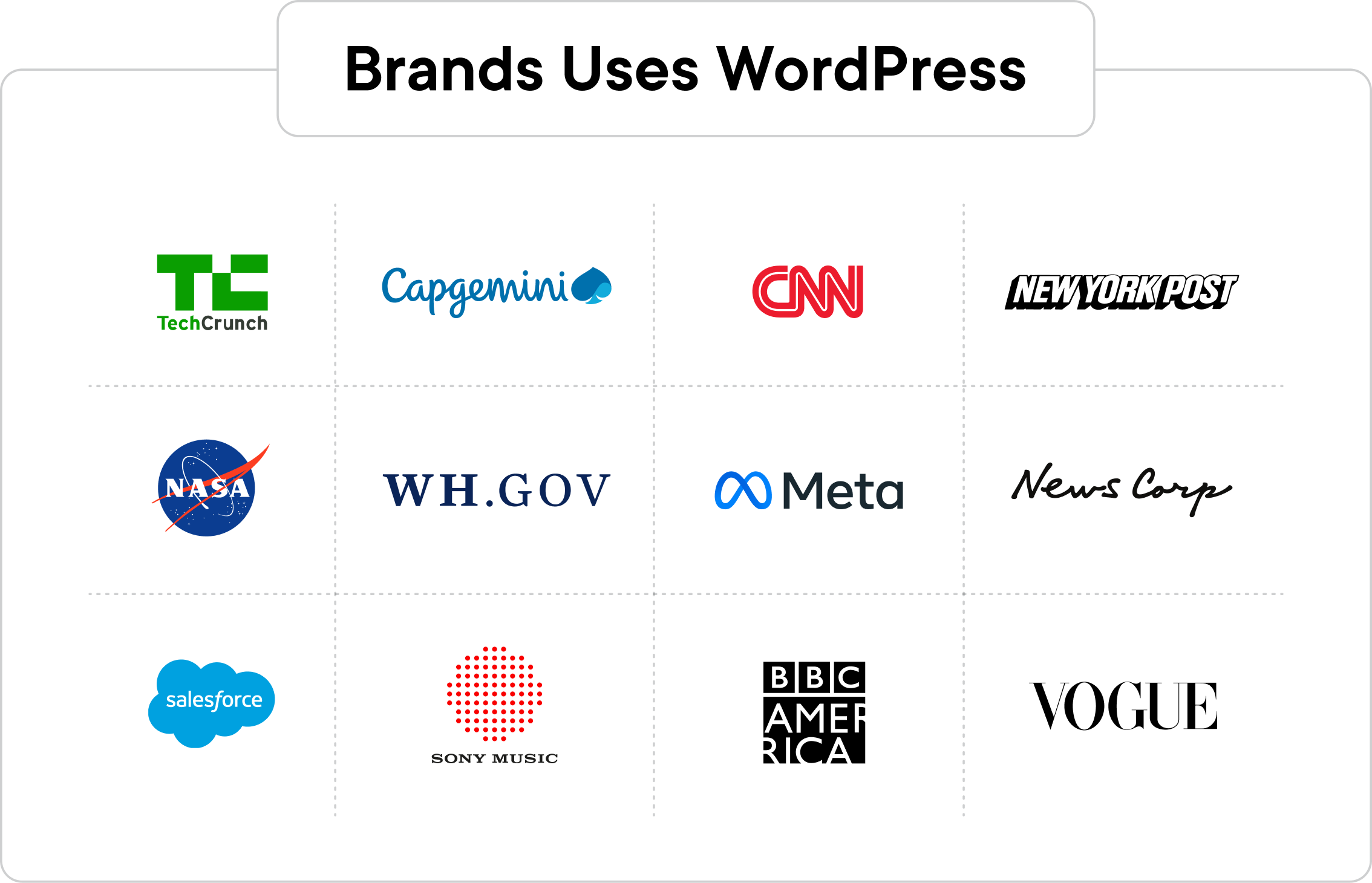
WordPress powers some of the web's highest-traffic properties, including major news outlets that handle millions of concurrent visitors. Examples like TechCrunch and major Fortune 500 corporate sites demonstrate WordPress's proven ability to scale to billions of page views.
Sitecore is built with enterprise scale in mind and can manage large-scale operations and high traffic. However, achieving this performance typically requires substantial infrastructure investment and specialized expertise.
Verdict: Both platforms can handle enterprise scale, but WordPress via solutions like WordPress VIP achieves comparable or superior performance with lower infrastructure costs and complexity. The proven track record of WordPress powering the web's highest-traffic sites demonstrates its scalability for any enterprise requirement.
8. E-commerce Functionality
WordPress offers comprehensive e-commerce capabilities through WooCommerce, the world's most popular e-commerce platform. WooCommerce powers over 6.5 million online stores and offers extensive features including product management, inventory control, payment processing, and shipping integration.
For enterprises requiring alternative approaches, WordPress also integrates seamlessly with headless e-commerce platforms like Shopify and BigCommerce.
Sitecore offers Sitecore Commerce, which integrates e-commerce functionality directly into the platform. However, Sitecore Commerce adds significant licensing and implementation costs on top of the core CMS.
Verdict: WordPress offers flexible, cost-effective e-commerce through WooCommerce and integration with specialized platforms. Sitecore provides integrated e-commerce but at significantly higher costs and with less flexibility in vendor selection.
9. Design and Customization Options
WordPress provides unmatched design flexibility through its extensive theme ecosystem. With over 12,000 free themes and thousands more premium options, enterprises can find designs that match their brand requirements or serve as starting points for custom designs.
The Gutenberg block editor enables sophisticated page building without coding, while maintaining clean, performant code. Time-to-market for WordPress designs is typically measured in weeks rather than months.
Sitecore requires custom development for most design work, as pre-built templates are limited. Creating custom Sitecore designs typically requires specialized front-end developers, meaning longer timelines and higher costs.
Verdict: WordPress's extensive theme ecosystem and modern block editor deliver faster time-to-market with lower costs, while Sitecore's approach requires substantial custom development for most design requirements.
10. Ownership Costs and Total Cost of Ownership
WordPress is open-source and free to use, eliminating licensing costs entirely. Total cost of ownership for enterprise WordPress typically ranges from $50,000 to $300,000 annually, depending on scale, customization requirements, and hosting tier.
Sitecore operates on a subscription model with significant licensing fees. Base licensing starts around $80,000 annually and can exceed $500,000 for larger implementations. Total cost of ownership for Sitecore implementations typically ranges from $500,000 to $3,000,000+ annually when accounting for licensing, infrastructure, development, and maintenance.
Cost Comparison Example: For a large enterprise site over 5 years:
- WordPress TCO: $750,000-$1,500,000
- Sitecore TCO: $2,500,000-$10,000,000+
Use our free Sitecore vs WordPress Cost Comparison Calculator to estimate your specific costs.
Verdict: WordPress offers dramatically lower total cost of ownership—often 50-70% less than Sitecore—making enterprise-grade CMS capabilities accessible without the massive investment required for proprietary platforms.
11. SEO and Marketing Capabilities
WordPress is renowned for its SEO-friendly architecture and extensive optimization tools. Leading SEO plugins like Yoast SEO and Rank Math provide comprehensive tools for content optimization, XML sitemap generation, schema markup, and meta tag management.
For marketing capabilities, WordPress excels through its integration ecosystem, easily connecting tools for email marketing, marketing automation, analytics, CRM, and social media.
Sitecore integrates SEO features within its platform architecture, though implementation typically requires technical expertise. Sitecore's primary strength lies in its integrated marketing capabilities including real-time personalization, marketing automation, customer segmentation, and the Experience Database (xDB).
While these integrated features are powerful, they also create vendor lock-in and require specialized training.
Verdict: WordPress provides proven SEO capabilities with easy implementation and flexible marketing integrations that allow best-of-breed tool selection. Sitecore offers integrated marketing features but with greater complexity, higher costs, and vendor lock-in. For most enterprises, WordPress's flexible integration approach provides better long-term value and adaptability.
12. Support and Community
WordPress benefits from the largest CMS community in the world, with millions of developers and users worldwide contributing to forums, documentation, and support channels. This massive community means help is always available, and the competitive marketplace of WordPress professionals ensures reasonable pricing.
Sitecore offers professional support through official channels, including technical support, training sessions, and knowledge base access. While Sitecore's support is professional and focused on enterprise needs, the smaller community means fewer resources and typically higher costs for professional services.
Verdict: WordPress's massive global community provides unmatched support resources, competitive professional services, and readily available expertise. Sitecore offers quality professional support but with a smaller community, more limited resources, and higher costs for specialized assistance.
Why Companies Migrate from Sitecore to WordPress
Common drivers for Sitecore to WordPress migrations include:
- Cost Reduction: Organizations consistently achieve 50-70% reductions in total cost of ownership after migrating to WordPress.
- Improved Editorial Experience: Content teams appreciate WordPress's intuitive interface and modern block editor compared to Sitecore's complex interface.
- Faster Time to Market: WordPress's plugin ecosystem and straightforward development process accelerate feature implementation.
- Greater Flexibility: Organizations regain control over their technology stack with WordPress's open-source model.
Real-World Example: A global automotive manufacturer—a billion-dollar enterprise—migrated 20 websites from Sitecore to WordPress with Multidots, achieving a 35% reduction in total cost of ownership and dramatically improved editorial team productivity through Gutenberg's intuitive interface.
Sitecore vs WordPress: The Verdict
Sitecore offers integrated marketing automation and personalization features built into the CMS. For organizations specifically requiring these integrated capabilities and possessing substantial budgets and specialized development resources, Sitecore remains a viable option.
WordPress delivers enterprise-grade content management with dramatically lower costs, faster implementation, easier team adoption, and greater flexibility. The platform's open-source model, massive community, extensive plugin ecosystem, and proven scalability make it the practical choice for most enterprises.
For organizations prioritizing cost efficiency, team productivity, faster time to market, flexibility in selecting marketing tools, and vendor independence, WordPress is the clear choice.
How Multidots Can Help?
Multidots is a WordPress VIP Gold Partner agency with over 16 years of specialized experience in enterprise WordPress implementations and complex migrations.
Whether you're considering WordPress for a new project or evaluating migration from Sitecore, our team provides expertise across:
- Sitecore to WordPress migration with minimal disruption
- Enterprise WordPress development for complex requirements
- WordPress VIP implementations for high-traffic sites
- CMS strategy consulting for platform selection
- Performance optimization and ongoing support
With a proven track record serving Fortune 500 companies and global enterprises, Multidots delivers mission-critical WordPress projects with seamless execution and measurable results.
Get in touch with us to learn more about your specific requirements and how we can help you achieve your goals.
Sitecore vs WordPress: FAQs
-
WordPress support is community-driven with extensive forums, tutorials, and a wealth of third-party resources. For enterprise-level needs, WordPress VIP offers tailored support, including expert code review and 24/7 access to WordPress engineers, ensuring high performance and security. Sitecore’s support, meanwhile, is structured and professional, with formal training, dedicated account managers, and direct support services, ideal for large organizations requiring a hands-on approach for their complex systems.
-
WordPress is widely used across various businesses, from small startups to large enterprises, due to its flexibility and ease of use. Sitecore, with its robust features and scalability, is typically used by larger organizations that need advanced data integration and personalization capabilities.
-
Sitecore offers comprehensive digital experience management with advanced personalization and marketing automation. WordPress VIP provides a high-performance hosting solution with robust security and enterprise-grade support, focusing on large-scale WordPress implementations. It provides additional services such as expert support, automated cloud hosting, and maintenance. WordPress VIP is best suited for businesses that require guaranteed uptime, high traffic management, and enterprise-grade security while still benefiting from the flexibility and ease of use of the WordPress ecosystem.
-
Developing and maintaining a website with Sitecore generally incurs higher costs due to its complex infrastructure and licensing fees. WordPress can be more cost-effective, with many free plugins and themes, though costs can rise with premium options.
-
Yes, migrating from Sitecore to WordPress is feasible and can be advantageous for reducing costs and increasing ease of use. It requires careful planning to ensure data integrity and functionality are maintained during the transition.
-
Both platforms support multilingual websites, but WordPress, with plugins like WPML, tends to be more user-friendly and cost-effective for creating multilingual sites. Sitecore offers powerful in-built multilingual support ideal for complex global enterprises.