

Key Takeaways
- Match your platform to your revenue model: Ghost for ownership, Beehiiv for list growth, Kit for product sales, WordPress for full media operations.
- Run the fee math on your current Substack earnings – you could be losing income to platform and processing fees that flat-rate alternatives would eliminate entirely.
- If you’re on a Substack subdomain, switch to a custom domain before you do anything else – you can’t take your SEO equity with you once you leave.
- Before migrating paid subscribers, pause Substack billing first – running both platforms simultaneously will double-charge your readers.
Yes, you’re earning on Substack – but that 10% cut on every paid sub, the limited automation, and those subdomain SEO constraints start to sting as your audience grows. At 1,000 paid subscribers, that’s $6,000 a year gone. Scale that up, and you’re looking at tens of thousands.
Not ideal.
This guide breaks down eight serious alternatives, organized by use case:
- Newsletter-first platforms like Beehiiv and Kit.
- Full publishing setups like WordPress and Ghost.
- And community-led options like Patreon.
You’ll also get a side-by-side comparison table and clear migration guidance – covering subscriber transfers, paid subscription continuity, and SEO preservation – the details most “alternatives” lists conveniently skip.
What Substack Offers
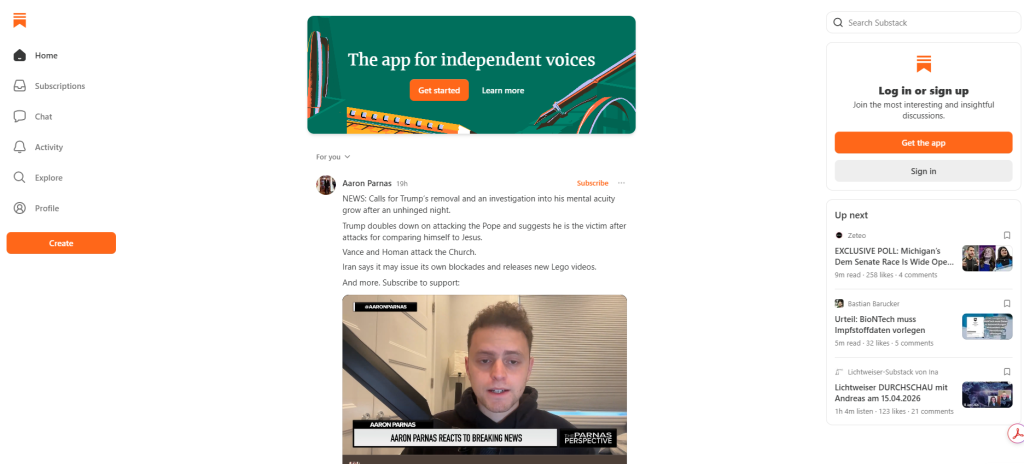
Before jumping ship, it helps to understand what Substack actually gets right and where things start to creak. Valued at $1.1 billion with 5 million+ paid subscriptions, the real question isn’t viability, but rather whether its trade-offs still work once you move beyond early growth.
Key Features
Substack gives you a full publishing stack out of the box:
- A clean editor.
- One-click publishing to web and email.
- Built-in paid subscriptions (billing and renewals handled).
- A reader app.
- Substack Notes for social discovery.
- And a recommendation network for cross-promotion.
Discovery is where it shines. Readers browse, follow, and subscribe within the ecosystem via recommendations, Notes, and categories. You don’t need to wire up plugins, a domain, or even an email service provider (ESP) – you just publish and go.
Pricing and Revenue Share
Although publishing is free, Substack takes a 10% cut of paid subscriptions, plus Stripe fees (~2.9% + $0.30 per transaction), landing at roughly 13% per payment.
At 1,000 subscribers paying $5/month, this means: $60,000/year gross → $6,000 to Substack vs $180/year for Ghost Starter – a $5,820 difference.
At $10,000/month you’re paying $12,000/year to Substack.
At $50,000/month you’re paying $60,000/year – enough to hire full-time editorial help.
Every alternative in this guide charges 0% revenue share, swapping percentage fees for flat monthly costs that don’t grow with your success.
Where Substack Works Well
Substack fits certain creators perfectly. If you’re starting from zero and want to publish and earn without touching anything technical, it delivers. The built-in network and app discovery genuinely help in the early phase when audience growth is the main hurdle.
For solo creators with smaller audiences, the 10% cut often amounts to a few hundred dollars a year. In that context, it’s effectively a deferred cost – you pay nothing until you earn, making it a low-risk way to test ideas.
Where the Model Breaks Down
As things scale, four friction points tend to surface:
Fee math at scale: That 10% grows with you, to the point it effectively becomes operational budget rather than pocket change. With alternatives charging 0% on subscriptions you can keep costs predictable.
Subscriber ownership ambiguity: Substack’s “follow” feature lets people engage without sharing email addresses. They see your posts in-app, but you can’t reach them directly. Add to that shifting email delivery algorithms, and your true reachable audience may be smaller than it looks.
Automation ceiling: No welcome sequences, drip campaigns, tagging, A/B testing, or conditional logic. If you’re selling products or segmenting audiences this becomes problematic. Everyone gets the same emails, regardless of behavior.
SEO limitations: Using a Substack subdomain means building SEO authority on their domain instead of yours. Migrate later, and that value doesn’t come with you. Custom domains exist, but with constraints – especially around URL structure.
Newsletter-First Alternatives
If your business runs on newsletters and list growth, you’ve got options. These four platforms come closest to replacing Substack – each with better economics, sharper automation, or stronger growth tools. The differences between them come in what they’re optimized for.
Beehiiv as a Substack Alternative
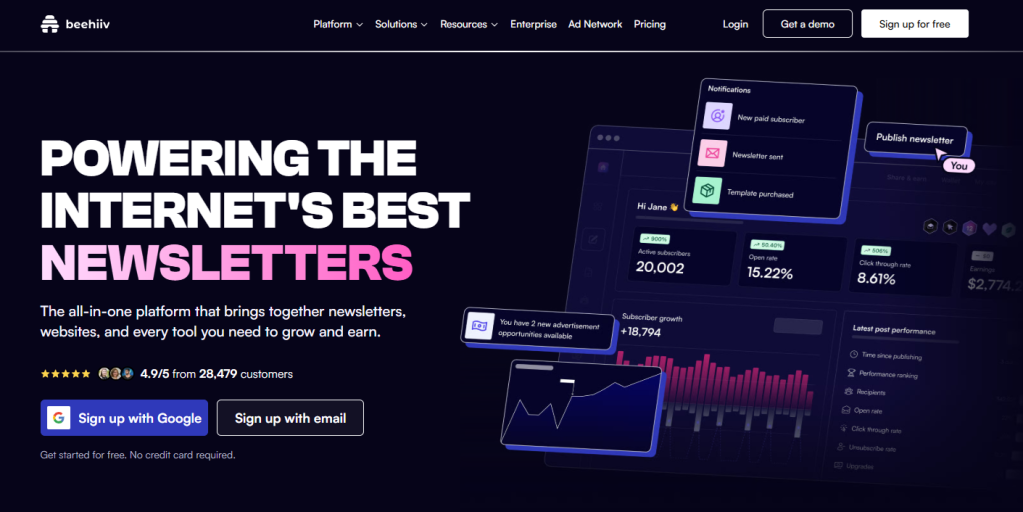
Cost Comparison: Free up to 2,500 subscribers. Scale plan at $43/month. Max plan at $96/month. Zero revenue share, which means you keep everything minus Stripe fees.
Features Comparison: A built-in referral program turns subscribers into growth drivers. Native ad network monetizes free readers without chasing sponsors. Cross-newsletter recommendations put your publication in front of similar audiences.
Use Cases: Growth-focused operators who treat subscriber acquisition as the main event and need infrastructure that accelerates it.
Success Stories: Powers high-growth newsletters like Arnold Schwarzenegger’s Pump Club and The Milk Road (250,000+ subscribers in under 10 months).
Kit as a Substack Alternative
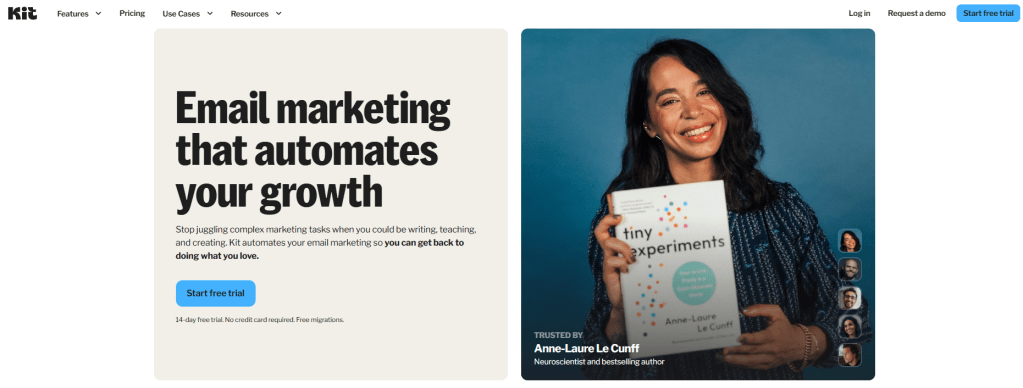
Cost Comparison: Free up to 10,000 subscribers with digital product sales included. Creator plan at $33/month. Pro at $66/month. And no percentage cut – what you earn stays yours.
Features Comparison: Visual automation builder for welcome sequences, nurture flows, and triggers. Behavioral tagging tracks actions automatically. Conditional sequences adapt content based on behavior. Native integrations with Stripe, Shopify, and Canva streamline selling and creation.
Use Cases: Creators selling courses, ebooks, templates, or memberships alongside newsletters who need more automation than Substack offers.
Success Stories: Chosen by creators like Tim Ferriss, Ali Abdaal, and Ryan Holiday. Over $2 billion in creator commerce processed to date.
MailerLite as a Substack Alternative
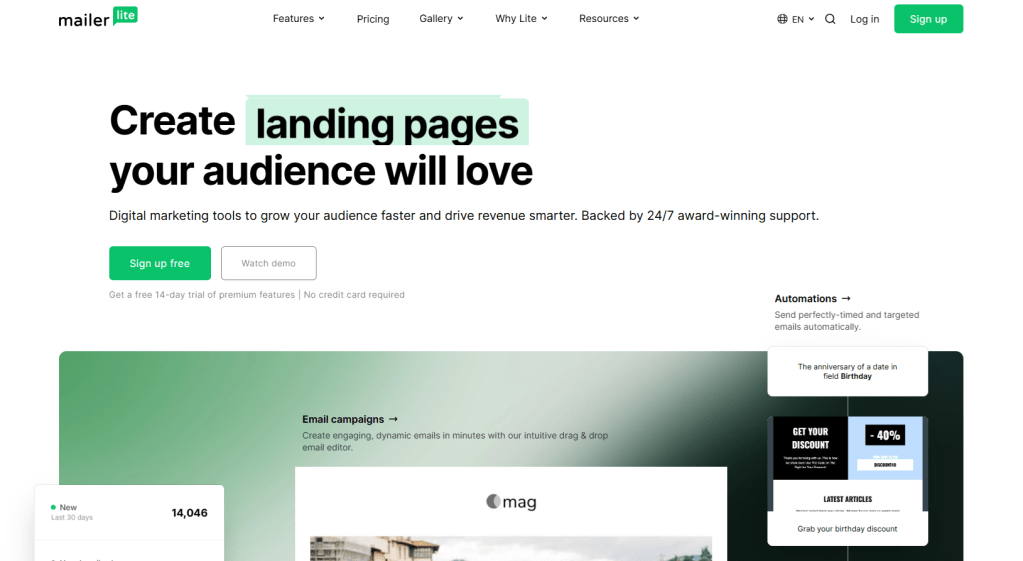
Cost Comparison: Free for up to 500 subscribers and 12,000 emails/month. Paid plans start at $10/month and scale with list size. Again, no revenue sharing.
Features Comparison: Drag-and-drop email builder for full design control. Visual automation builder for sequences and campaigns. Landing pages and paid subscriptions included.
Use Cases: Budget-conscious creators who want design flexibility and automation without premium pricing, especially those moving beyond the free tier.
Success Stories: Used by 1.5+ million creators worldwide. Holds a 4.7/5 rating on G2, with standout marks for deliverability and ease of use.
Buttondown as a Substack Alternative

Cost Comparison: Free up to 100 subscribers. Paid add-ons from $9/month, scaling with list size.
Features Comparison: Markdown editing for a clean writing experience. API access for custom workflows and programmatic newsletters. RSS-to-email for automatic blog distribution. Stripe handles paid subscriptions.
Use Cases: Developers, technical writers, and minimalists who want a focused, distraction-free setup without visual builders.
Success Stories: Used by Cassidy Williams and Python Weekly – chosen for its lightweight codebase and reliable API.
Full Platform Ownership Alternatives
This category marks a clear shift – from newsletter tools to full publishing platforms, allowing you to take ownership of the entire operation instead of renting space on someone else’s platform.
These options suit teams juggling multiple content formats and expanding beyond newsletters alone. So, if you need newsletters, site content, ecommerce, memberships, and editorial workflows – all under your own domain – these are likely the solutions you’re looking for.
WordPress as a Substack Alternative
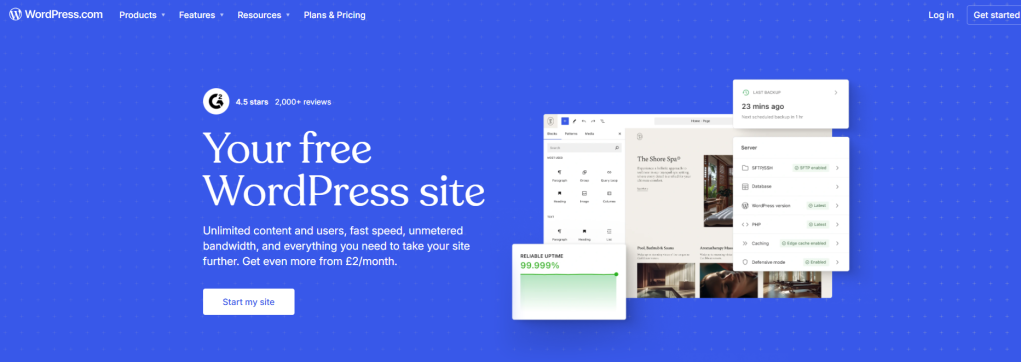
Cost Comparison: WordPress itself is free and open-source, so total cost comes down to hosting and plugins – typically $50–$300/month depending on traffic and features.
Features Comparison:
- MailPoet handles newsletters, automation, and segmentation.
- MemberPress manages paid memberships with tiered access.
- WooCommerce powers digital products and courses.
- Newsletter Plugin offers an alternative email setup.
You fully own your data – subscribers, content, and customer records can be exported anytime without permission. SEO runs on your domain, building lasting search authority. Design is fully flexible via themes and custom builds. Multicollab enables team workflows with roles, permissions, and collaborative editing for multi-author setups.
WordPress does require more setup than hosted tools with plugins, hosting, email services, and updates to consider. But that complexity buys complete control over your infrastructure.
Use Cases:
- Media businesses and scaling publishers needing newsletters.
- Web publishing, ecommerce, and memberships in one place.
- Teams outgrowing single-purpose tools and planning for multiple revenue streams.
- Organizations with technical support (or budget for managed hosting) prioritizing long-term ownership.
Success Stories:
- Sneaker News moved to WordPress VIP and saw organic traffic rise from 40% to 60%, with load times dropping from 5s to 1.2s while serving 7.5M monthly users.
- Ask Media Group migrated 11 sites and 50,000+ posts in 12 weeks with zero downtime.
WordPress for Enterprises: Learn the Secret Sauce of Big Enterprise WordPress Websites
An In-Depth Look at the Engineering and Design Behind Billion-Dollar Enterprises’ WordPress Websites



Ghost as a Substack Alternative
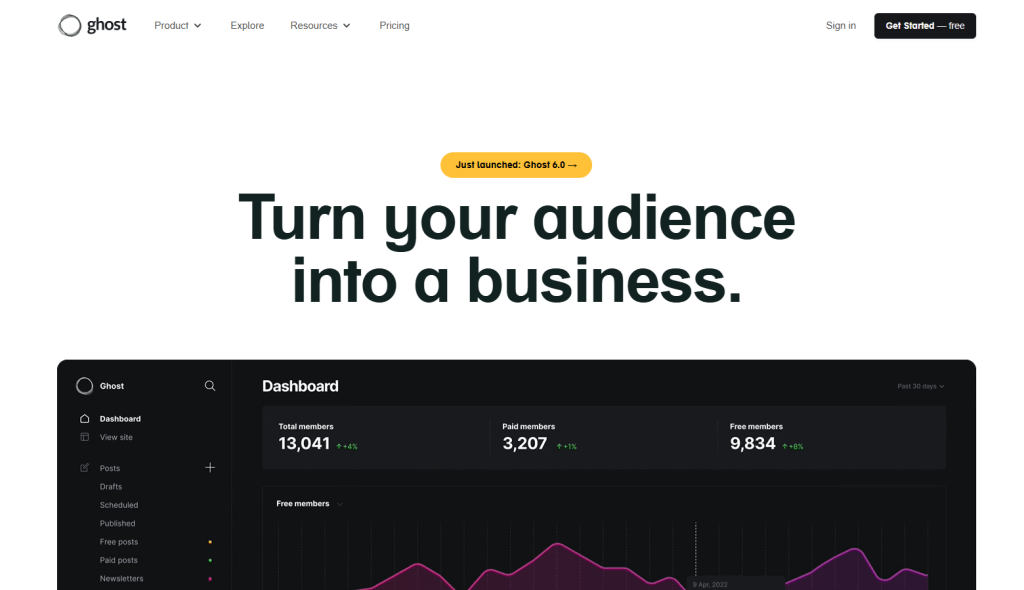
Cost Comparison: Ghost Starter is $15/month billed annually ($180/year). Publishers wanting membership tiers need the Publisher plan at $29/month; Business is $199/month. Again, you keep everything minus Stripe fees. Custom domain and email included. Annual plans come with free concierge migration for content and subscribers.
Features Comparison: Ghost is a full CMS, not just a newsletter tool. Built-in SEO covers structured data, XML sitemaps, and canonical tags – all handled automatically. Custom themes offer full design control. Ghost Pro manages hosting, security, performance, and scaling. Despite its flexibility, it’s fully managed, challenging the idea that it’s “too technical.” Membership tiers support multiple pricing levels and gated content.
Use Cases:
- Independent publishers who want brand ownership on their own domain without WordPress-level setup.
- Writers moving beyond Substack’s revenue share but not needing full ecommerce.
- Teams that want predictable, flat pricing – $15/month whether earning $1K or $100K per year.
Success Stories: Isaac Saul runs Tangle on Ghost with 70,000 paying subscribers, generating around $4M annually. Ghost’s flat pricing saves roughly $400K per year compared to Substack’s 10% cut.
Limitations: Ghost lacks referral programs, native ad networks, and built-in discovery features found in platforms like Beehiiv, favoring ownership and publishing control over growth mechanics and network effects.
Platform-Dependent Alternatives
The earlier options leaned into ownership, enabling you to control the infrastructure, data, and domain. With this next category, you’re trading that control for something harder to build on your own: built-in audiences and community features.
It’s worth noting that these platforms don’t fix Substack’s ownership problem – you’re still building on someone else’s land, with limited portability. But there is a real upside nonetheless: Medium brings algorithmic discovery and a ready-made readership, while Patreon delivers community infrastructure and support for multiple content formats.
Medium as a Substack Alternative
Cost Comparison: Medium is free to publish. There are no hosting fees, subscriptions, or setup costs. Writers keep 100% of Partner Program earnings, though Medium takes a cut from member subscription fees that fund the payout pool.
Features Comparison: Medium’s edge is discovery. Your work shows up in its recommendation engine, category feeds, and search results. Which means readers get nudged toward you through the platform’s network effect.
The Partner Program pays based on engagement. You earn when members spend time reading your work. Top writers pull in thousands per month without having to manage an email list.
The trade-off is you don’t own the relationship. If you leave the platform your content comes with you, but your audience doesn’t. Your URLs sit on medium.com/@yourname, which means you’re building on Medium’s terms.
Use Cases: Writers who want reach and monetization without technical overhead. Ideal for essayists, journalists, and thought leaders prioritizing visibility over ownership. A strong fit if you’re comfortable trading control for distribution.
It’s also a smart testing ground – quick to publish, instant audience access, no infrastructure to manage.
Patreon as a Substack Alternative

Cost Comparison: New creators (post-August 2025) pay a standard 10% platform fee. Legacy creators on older plans may still pay 5–8%. Add ~2.9% + $0.30 per transaction for payment processing.
Unfortunately, this doesn’t solve the fee issue because your costs scale with success. At $10,000, you’re paying ~$1,000 in platform fees plus processing, totaling around $1,300/month Rather than paying less, you’re paying for different infrastructure.
Features Comparison: Patreon is built for community. Tiered memberships unlock different perks. Posts create a social feed where patrons interact. Content isn’t limited to text – you can share audio, video, images, downloads, early access etc., on a platform designed for engagement.
Comments, DMs, polls, and patron-only spaces create ongoing interaction. You can charge monthly or per creation.
The platform suits creators whose work spans formats, allowing podcasters, video creators, musicians, and artists to use Patreon to deliver experiences newsletters can’t.
Use Cases: Multi-format creators whose value lives in community and exclusive content – behind-the-scenes access, early releases, discussions, direct interaction. Less about email delivery, more about belonging.
Writers here usually pair Patreon with other channels – podcasts, YouTube, or social media drive discovery; Patreon deepens the relationship.
Success Stories: Patreon has over 10 million paying patrons supporting creators across formats. It’s paid out $8 billion since launch.
Comparison Table
| Platform | Cost | Differentiator | Best For | Proof |
|---|---|---|---|---|
| Beehiiv | Free to 2,500; $43-$96/mo; 0% share | Referral program, ad network | Growth-focused operators | Milk Road: 250K in 10 months |
| Kit | Free to 10K; $33-$66/mo; 0% share | Visual automations, product sales | Creators selling digital products | $2B+ creator commerce |
| MailerLite | Free to 500; from $10/mo; 0% share | Budget-friendly automation | Budget-conscious creators | 1.5M users, 4.7/5 G2 |
| Buttondown | Free to 100; from $9/mo; 0% share | Markdown, API access | Technical writers | Python Weekly |
| WordPress | $50-$300/mo; 0% share | Complete ownership, flexibility | Media businesses, publishers | Sneaker News: 5s to 1.2s |
| Ghost | $15-$199/mo; 0% share | Managed CMS, flat pricing | Independent publishers | Tangle: 75K subs, $4M revenue |
| Medium | Free; Partner earnings | Built-in audience | Visibility over ownership | 100M+ readers |
| Patreon | 10% fee + processing | Community, multi-format | Multi-format creators | 10M+ patrons, $8B+ paid |
Migrating Without Losing Subscribers
Migration anxiety stops more creators from switching than platform limits ever do. Most “alternatives” guides run through features and pricing… then leave you wondering how to actually move without losing subscribers or wrecking your archive. This is the part they skip.
What Migration Involves
Free subscriber migration is refreshingly simple. Substack lets you export your full list as a CSV via dashboard settings – email addresses, subscription dates, status, the lot.
Ghost, Beehiiv, Kit, and WordPress all accept CSV imports. Upload, map the fields, confirm, done. Hours, not days. Most platforms will send welcome emails to imported subscribers (which you can tweak or turn off).
Paid subscribers are where things can get tricky as you’re moving live billing relationships – renewal dates, payment methods, tiers. This needs a bit more care to avoid double-charges or awkward billing gaps.
Protecting Paid Subscribers
Pause Substack billing before switching on your new platform. Substack keeps taking its 10% until you actively move paid subscribers, and running both at once risks charging people twice.
The cleanest route is to simply tell paid subscribers your timeline, explain the billing pause, then reactivate on the new platform. Turn off new paid signups in Substack, let the current cycle finish, then relaunch. Subscribers re-enter payment details, and you start afresh without legacy ties.
Some platforms will even handle the heavy lifting. Ghost offers free concierge migration for annual Publisher or Business plan users – content, subscribers, setup, the works. Kit and Beehiiv provide guided support on higher tiers too.
Retaining SEO and Archives
301 redirects keep your search rankings intact when you move domains. Set up permanent redirects from old Substack URLs to matching pages on your new site. Ghost and WordPress support full archive imports with URL mapping, so your structure and internal links stay intact.
If you’re already on a custom domain, you’re in a strong position. You control DNS, so you can point your domain to the new platform and set up redirects cleanly.
Using a subdomain (yourname.substack.com) is less straightforward. You can’t control redirects once you leave, so old URLs eventually return 404s and rankings don’t carry over. The upside is everything new you publish builds authority on a domain you actually own, for good.
Pick Your Platform and Migrate
Choosing the right alternative comes down to what you actually need. Craft-focused writers lean toward Ghost or Buttondown. Growth-focused creators go with Beehiiv. If you’re selling products, Kit is an ideal fit. Watching costs? MailerLite works. Creating across formats? Patreon. While if you’re running a media business with a team, WordPress gives you the full publishing infrastructure.
Multidots has handled 300+ WordPress migrations for publishers who’ve outgrown single-purpose tools. Our dedicated Substack-to-WordPress guide walks through subscriber preservation, content migration, and SEO retention, especially where things get complex.
If you need more than a newsletter tool, Multidots migration services offer hands-on support to make the transition stick.
Ready to move? Talk to the team about a migration plan built around your subscriber list, SEO equity, and launch timeline.