
Our Speakers


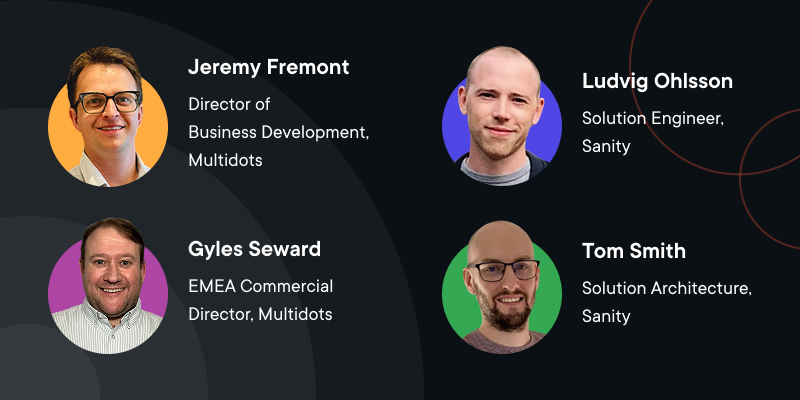
Jeremy Fremont
Director of Business Development
Jeremy has spent 17+ years helping enterprise organizations and emerging startups build digital solutions that grow their businesses. As Director of Business Development at Multidots, he works at the intersection of technology, content, and process, focused on how getting that mix right creates value for an organization’s customers, markets, and relationships. He is based in Austin, Texas.

Gyles Seward
EMEA Commercial Director
Gyles leads Multidots’ commercial work across Europe and brings 25+ years in account management, commercial development, and digital strategy. He has helped organizations across publishing, SaaS, financial services, education, and the not-for-profit sector realize the potential of enterprise content platforms, including prior work as commercial lead at enterprise WordPress agency 10up and founding one of Europe’s leading WordPress enterprise agencies.


Tom Smith
Solution Architecture
Tom leads solution architecture for EMEA at Sanity, where he has spent close to four years across senior solutions engineering and architecture roles. He helps enterprise teams design content models and platform architectures that fit how their business actually works, and is a long-time advocate for structured content and Portable Text.

Ludvig Ohlsson
Solution Engineer
Ludvig is a solutions engineer at Sanity, based in Stockholm. Before joining Sanity he was Head of Development at Merkle Sweden, leading the content solutions practice and managing web and development projects. He works hands-on with teams adopting structured content, from content modeling and schema as code to real-time collaboration and enterprise governance.
Watch Session
In this session, our team and Sanity show why the traditional CMS no longer fits modern content needs, and how a content operating system lets you structure content once and deliver it anywhere, from web and mobile to your own AI agents. Includes a live demo of content modeling, real-time collaboration, and enterprise governance at scale.

Where would you like us to send these slides?
Key Takeaways from Our Session with Sanity
Learn why structured content is the foundation of every modern content and AI workflow, where legacy CMS architectures break down at enterprise scale, and what a content operating system unlocks for teams that need to publish everywhere.
Why the Traditional CMS Falls Short
Legacy platforms like Drupal and Sitecore couple content, presentation, workflow, and business logic too tightly. They were built to manage pages, not to support the multi-channel, dynamic experiences modern brands need to deliver.
From Page Management to Content Operations
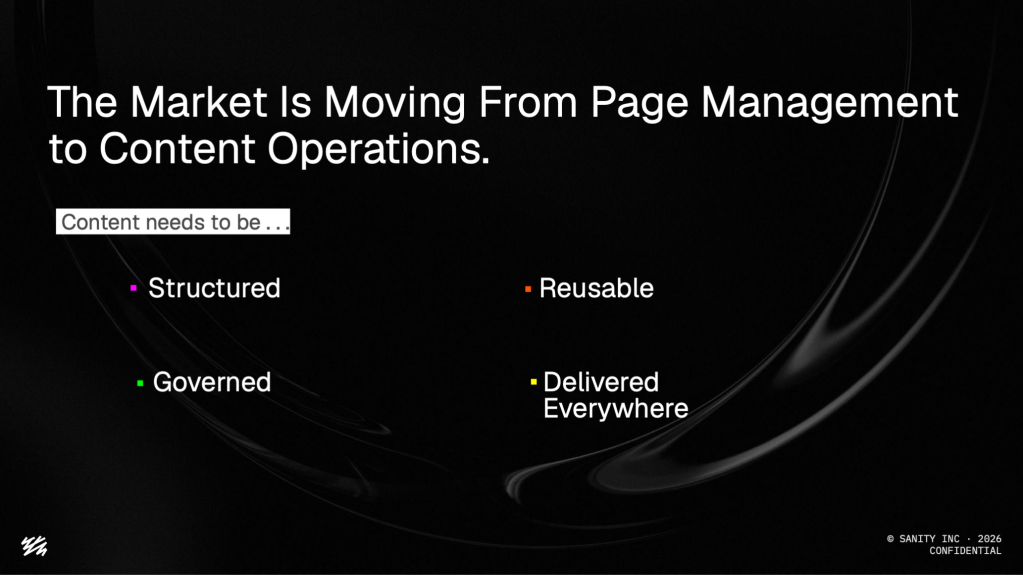
Content today has to be structured, reusable, governed, and delivered everywhere. The shift is away from managing individual pages and toward operating content as a reusable asset across every brand touchpoint.
Structured Content Is the Foundation
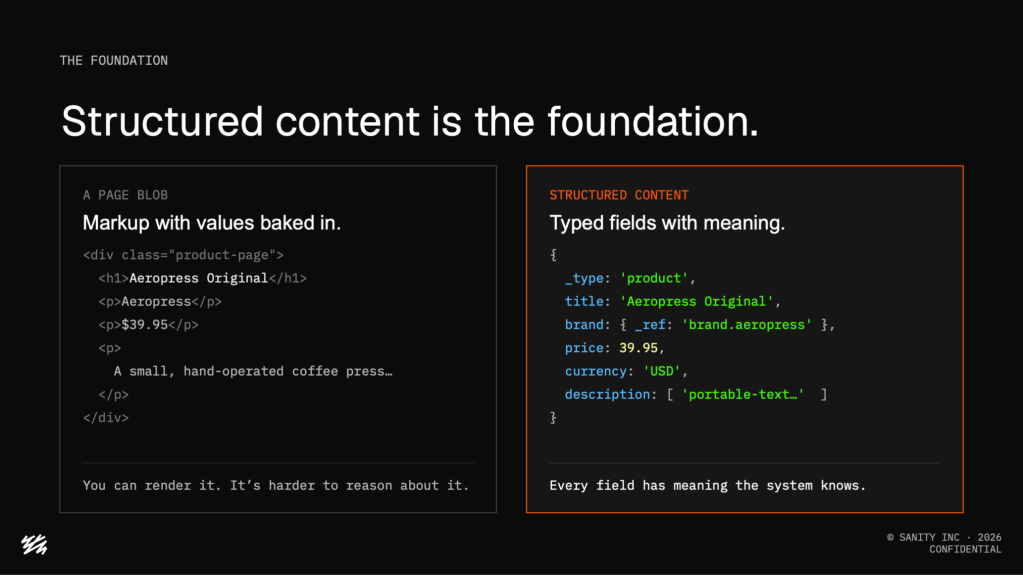
A page blob bakes values into markup, so it’s hard to reason about. Structured content uses typed fields with meaning, so every field carries context the system understands. This is what makes content reusable, portable, and ready for anything.
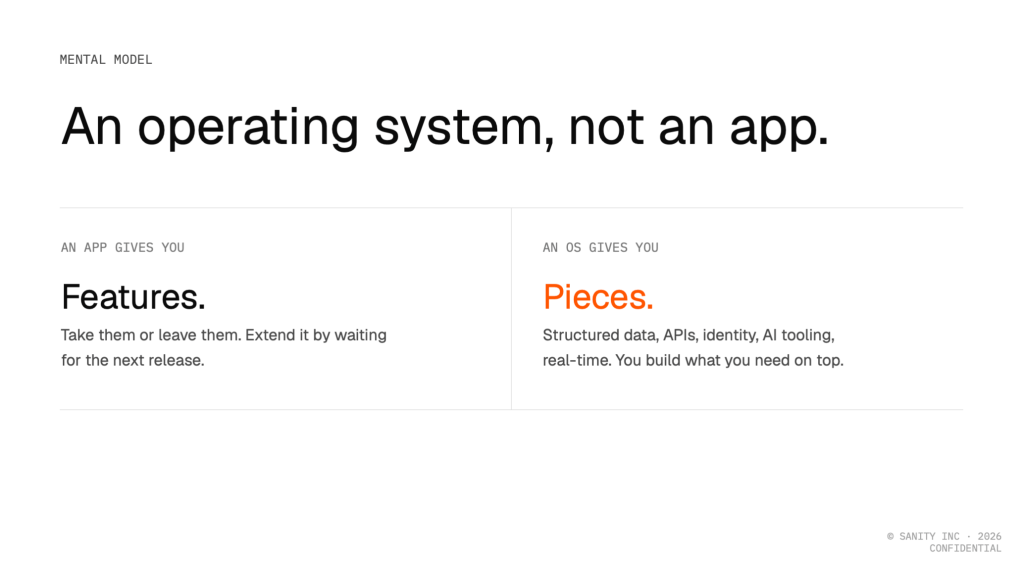
An Operating System, Not an App
An app gives you fixed features. An operating system gives you the pieces: structured data, APIs, identity, real-time, and AI tooling. With Sanity you build exactly what you need on top, across applications, AI operations, and foundations.
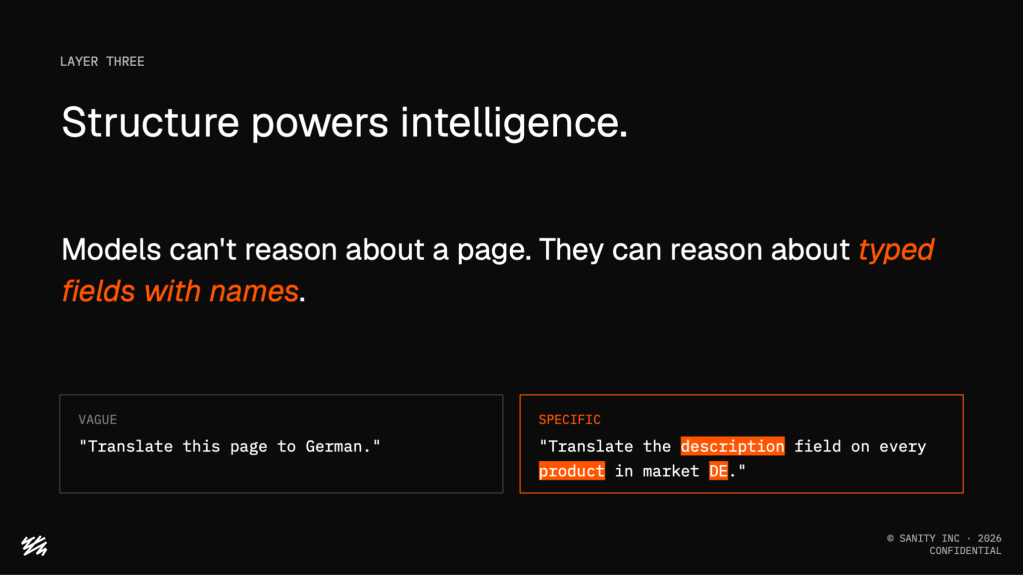
Structure Powers Intelligence
AI is only as good as the content you feed it. Models can’t reason about a page, but they can reason about typed fields with names. Structured content gives AI fields to act on instead of pages to guess at, turning AI into infrastructure rather than a bolt-on.
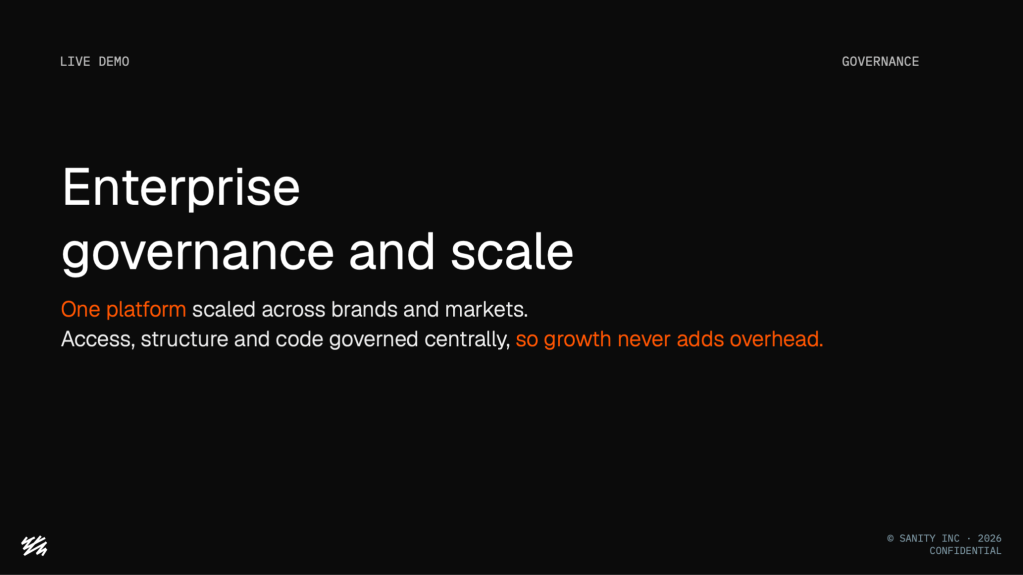
Enterprise Governance and Scale
One platform scaled across brands and markets, with access, structure, and code governed centrally. Teams scale across brands, regions, and channels on one foundation they control, instead of five they have to maintain, so growth never adds overhead.
Where would you like us to send these slides?