Adobe is a market leader in enterprise-level Content Management Systems (CMS). Adobe Experience Manager (AEM) helps many global companies store, organize, and manage online content. However, for many businesses, especially large enterprises, AEM often has drawbacks. High costs, a dependency on developers for minor changes, and limited customization options can present significant challenges.
Thankfully, AEM isn’t the only option. There are many other CMS solutions suitable for large enterprises. In this article, we’ll explore the pros and cons of AEM and consider the top five alternatives to this CMS.
The top AEM alternatives fall into three categories: all-in-one digital experience platforms (DXPs) like Sitecore, Bloomreach, and Kentico; headless CMS options such as Contentful, Storyblok, and Sanity; and open-source CMS platforms including WordPress and Drupal. Each serves different enterprise needs, from omnichannel personalization to API-first content delivery.
In this article, we’ll explore the pros and cons of AEM and consider the top ten alternatives to this CMS.
Whether you want enhanced customization, cost-effectiveness, or improved workflows, this guide will help you discover the best CMS for your business
Pros and Cons of Adobe Experience Manager
Pros of AEM
Scalability: AEM is great for scalability and adept at handling vast amounts of data and traffic. Even if your business experiences a surge in website visitors or manages an extensive library of digital assets, AEM ensures performance and reliability are never compromised.
Personalization: Using sophisticated AI-driven tools, AEM offers personalized customer experiences. Through advanced segmentation and targeting, businesses can deliver content tailored to individual users, enhancing engagement and driving conversions.
Multichannel Content Management: Whether it’s for web, mobile, social media, or email, AEM provides a unified platform for content creation, management, and distribution, ensuring a cohesive brand experience.
Customer Support: AEM offers its users dedicated support teams and comprehensive documentation to resolve any issues or challenges they may encounter.
Cons of AEM
High Cost: One of AEM’s primary drawbacks is its cost. The investment required for licensing and implementing AEM can be substantial, particularly for enterprises operating on constrained budgets.
Complexity: AEM is renowned for its feature set and extensive capabilities. However, navigating them can be daunting, especially for team members without AEM experience. The steep learning curve associated with AEM implementation can pose challenges and hinder productivity.
Dependency on Developers: Relying on dedicated teams of developers for maintenance and updates means AEM can lead to bottlenecks in the development process, resulting in longer deployment times for content and features. Businesses may incur additional costs associated with developer resources, adding to the overall investment in AEM implementation.
Businesses should carefully consider their requirements and priorities when considering AEM for their content management. While AEM offers scalability and personalization opportunities, its high cost and complexity may present barriers for some organizations.
10 Alternatives to Adobe Experience Manager
1. WordPress
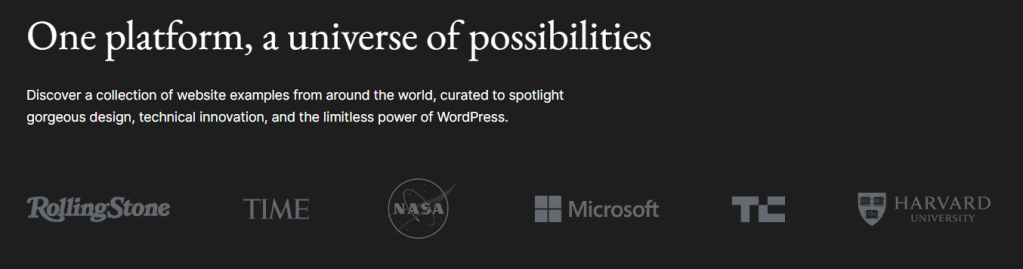
WordPress is an open-source CMS that provides a cost-effective alternative to AEM for enterprises seeking flexibility without vendor lock-in.
WordPress is by far the most popular CMS, powering 43.3% of websites online. This popularity is largely due to its ease of use, making it a favorite among large organizations. With WordPress, multiple teams can quickly upload content, freeing developers’ time to focus on other aspects or projects. This agility is especially beneficial for fast-paced industries like media and publishing.
Compared to AEM’s steep learning curve, WordPress offers a more user-friendly experience that empowers non-technical teams to manage content independently – reducing bottlenecks and accelerating time-to-publish.
Here at Multidots, we choose to build sites using WordPress. Why? For one, because of the sheer volume of customization options. No matter what size site you want to build or what functionality you need, WordPress can cater to it all.

WordPress has extensive integration capabilities with digital tools and Customer Relationship Management (CRM) systems, creating a flexible system adaptable to any industry. Its collection of plugins and themes enables organizations to customize their sites to their unique specifications.
WordPress is a viable CMS for mid-sized businesses that need enterprise-grade functionality without enterprise-level costs. Comparing AEM and WordPress costs reveals significant savings potential for growing organizations.
Something else that truly sets WordPress apart is its community support, which provides users with a wealth of resources and assistance. As an open-source CMS, WordPress allows users to view and modify its source code, ensuring full ownership of their software and content without being tied down by licensing fees. This openness also translates to cost-effectiveness, making WordPress an attractive AEM alternative for enterprises of all sizes.
Some great things to know about WordPress are:
- It is open source.
- There are over 55,000 plugins to bring your vision to life.
- You can choose your website layout from thousands of themes or start from scratch.
- WordPress has worked with big names like NASA and Rolling Stone.
- You own all of your content.
2. Drupal

Drupal is an open-source CMS built for developers who require extensive customization capabilities. It serves as the go-to AEM alternative for organizations prioritizing technical flexibility over ease of use.
Like WordPress, Drupal is an open-source CMS that benefits from transparency, flexibility, and community-driven development. What people like most about Drupal is its philosophy of catering to “ambitious site builders” who aspire to create sophisticated and highly extensible websites.
For enterprises with large digital initiatives, Drupal offers extensive customization capabilities. Its modular system allows developers to craft tailored solutions, ensuring the CMS aligns perfectly with the organization’s unique requirements and objectives.
Where AEM requires proprietary expertise and vendor dependency, Drupal’s modular architecture lets development teams build custom solutions using standard web technologies – giving enterprises greater control over their digital infrastructure.
However, it’s important to recognize that not every enterprise necessarily requires an ambitious build. Sometimes, prioritizing speed and ease of use may be more important over extensive customization. While Drupal is great for ambitious projects, organizations should weigh the trade-offs and consider their specific needs and priorities.
Some things to know about Drupal:
- It is open source.
- It has translation capabilities.
- It offers real-time sales alerts with marketing automation.
3. Sitecore
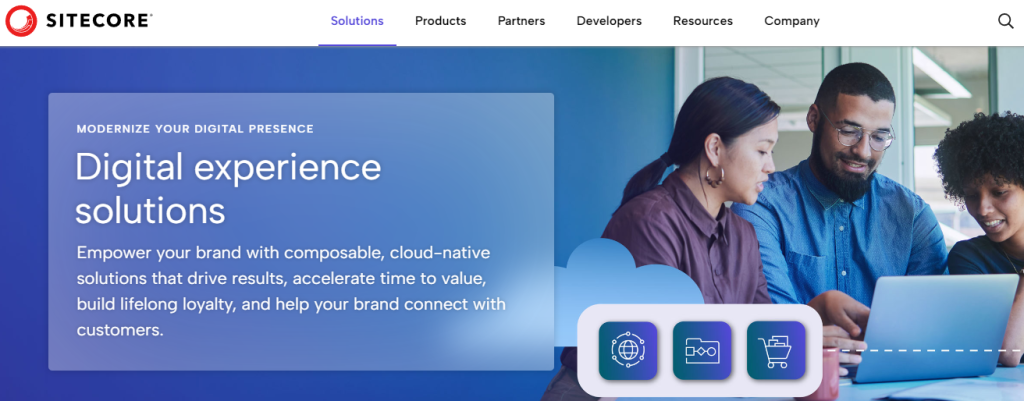
Sitecore is an enterprise DXP that combines content management, digital commerce, and AI-powered personalization in a unified platform.
The platform integrates content management, commerce, marketing automation, and personalization into integrated software. This approach allows organizations to deliver tailored and engaging experiences across all digital touchpoints, driving customer engagement and loyalty.
Both Sitecore and AEM offer robust personalization engines, but Sitecore’s native integration of content, commerce, and marketing tools can streamline implementation for teams already working within the Microsoft ecosystem.
With its foundation built on the .NET framework, Sitecore is particularly appealing to developers already familiar with this technology stack. This familiarity allows for efficient development and customization, using the platform’s full potential to meet specific business needs and objectives.
Sitecore may suit enterprises better than AEM when existing infrastructure relies on .NET technologies, or when tighter integration between content and commerce is a priority.
However, like other enterprise platforms, Sitecore’s extensive feature set and capabilities may be challenging for users unfamiliar with the platform. It can be difficult to learn, and it takes quite a lot of time to get used to everything. While Sitecore offers excellent functionality for organizations looking for a unified online experience, careful consideration and investment in training are essential to maximizing its benefits!
Some things to know about Sitecore:
- Over 3,000 companies are using Sitecore.
- It offers many personalization features.
- Real-time brand management is also available with Sitecore.
4. Liferay
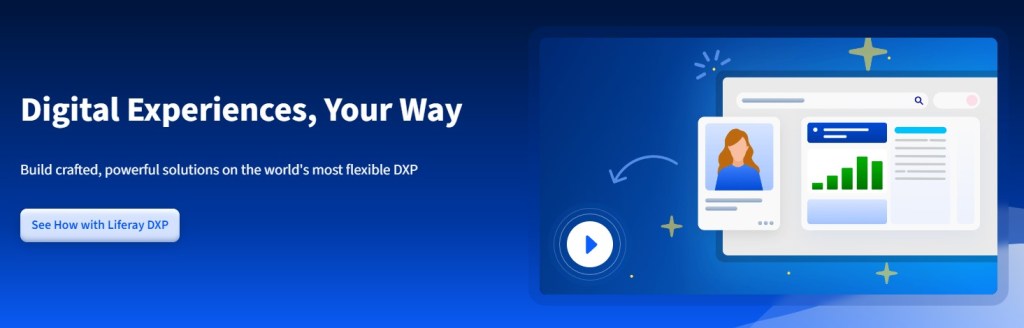
Liferay homepage
Liferay is a digital experience platform designed for building enterprise portals, intranets, and connected digital ecosystems.
Liferay is known for its capability to craft portals, intranets, and extranets, making it a good option for organizations looking for more comprehensive solutions.
With Liferay, organizations can integrate various web applications, including websites, mobile app development platforms, Enterprise Resource Management (ERM) software, and customer databases. This integration helps to create a cohesive digital ecosystem, improving operations and enhancing user experiences across multiple channels.
Unlike AEM’s focus on marketing-driven content delivery, Liferay excels at internal digital experiences – making it a stronger choice for organizations prioritizing employee portals and B2B collaboration over consumer-facing content.
However, Liferay’s extensive features come with a steep learning curve. While it offers powerful capabilities for organizations with complex digital needs, mastering the platform may require significant time and resources. Organizations considering Liferay must be prepared to invest in training and support to use its potential fully.
Some things to know about Liferay:
- It is used by over 1,200 customers worldwide.
- It offers the flexibility to replace or incorporate any technologies with composable architecture, including your current systems and tools.
5. Joomla

Joomla is an open-source CMS that specializes in multilingual content management and user permission controls.
Joomla is especially popular due to its multilingual capabilities, making it an excellent choice for organizations with diverse audiences in different languages and regions. Its built-in features and extensions facilitate seamless translation and localization, enabling businesses to reach a global audience effectively.
For organizations that need multilingual support without AEM’s complexity and cost, Joomla delivers native translation features at a fraction of the investment.
Joomla is known for its user-friendly nature, offering a more intuitive and straightforward content management experience. From customizable templates to a library of extensions, Joomla provides flexibility in design and functionality, ensuring that each website reflects the unique identity and branding of the organization.
While Joomla is suitable for organizations of all sizes, it is often considered more ideal for medium enterprises than large corporations. Its user-friendly nature and customization capabilities make it well-suited for businesses looking for a cost-effective solution with robust features, scalability, and ease of use.
Some things to know about Joomla:
- Joomla is mobile-friendly.
- It offers unlimited design options.
- It has multi-user permission levels for added security.
6. Contentful
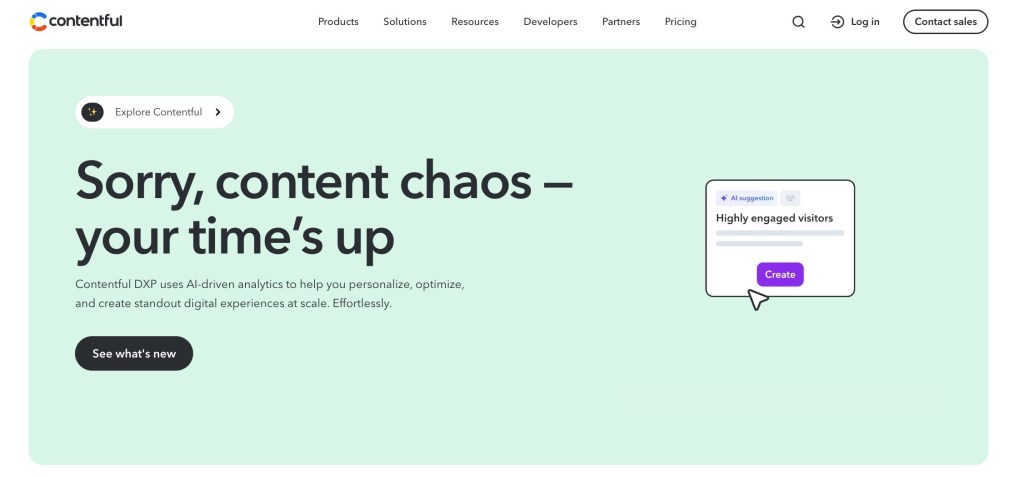
Contentful homepage
Unlike traditional CMS platforms like AEM that couple content management with presentation layers, headless CMS solutions separate these concerns entirely. A headless CMS stores and delivers content via APIs, allowing developers to build front-end experiences using any framework while content teams work in a dedicated editorial interface.
Contentful is an API-first headless CMS that enables enterprises to deliver content across websites, mobile apps, and IoT devices from a single platform.
The platform’s composable content infrastructure gives development teams complete freedom over front-end technology choices. Rather than wrestling with AEM’s monolithic architecture, teams can adopt modern frameworks like React, Vue, or Next.js while maintaining a consistent content backbone.
Where AEM ties content to specific templates and channels, Contentful’s API-driven approach lets enterprises reuse content across unlimited touchpoints – reducing duplication and speeding up omnichannel delivery.
Some things to know about Contentful:
- It powers digital experiences for brands like Spotify, Urban Outfitters, and Staples.
- Content modeling is fully customizable to match business requirements.
- Built-in localization supports global content strategies.
7. Storyblok
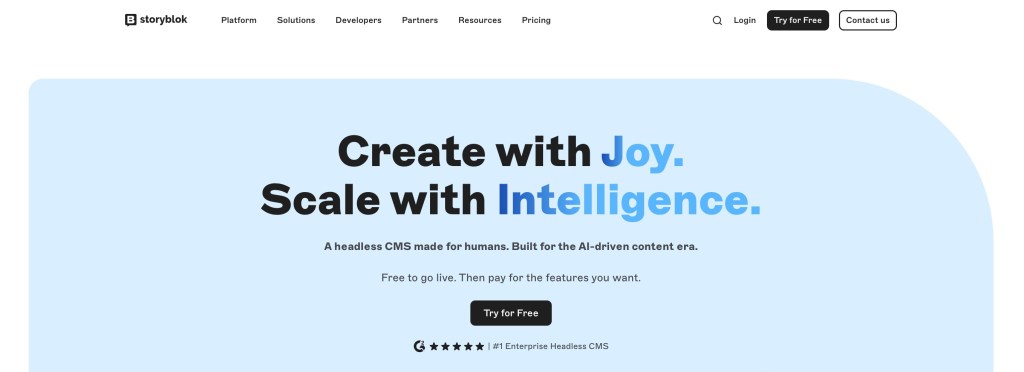
Storyblok homepage
Storyblok is a headless CMS that combines visual editing capabilities with API-first content delivery for a more intuitive editorial experience.
What sets Storyblok apart in the headless space is its visual editor. Content teams can see exactly how their changes will appear across different channels in real time – bridging the gap between developer flexibility and marketer usability that often frustrates teams on traditional headless platforms.
Storyblok’s visual editing makes it more accessible for non-technical content teams compared to AEM’s complexity. Organizations can maintain the architectural benefits of headless while giving marketers the preview-driven workflow they expect from traditional CMS platforms.
Some things to know about Storyblok:
- The visual editor supports real-time preview across all connected channels.
- Component-based architecture enables reusable content blocks.
- Native integrations include e-commerce platforms, analytics tools, and marketing automation systems.
8. Sanity
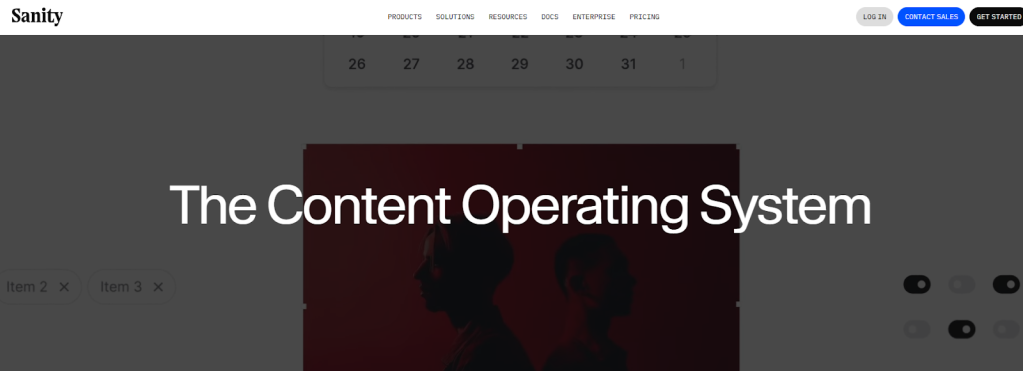
Sanity homepage
Sanity is a headless CMS offering real-time collaboration and fully customizable content structures through its open-source editing environment.
Sanity’s approach centers on treating content as structured data. Its Sanity Studio – an open-source, React-based editing interface – can be customized to match exact workflow requirements. Development teams appreciate the flexibility to define content schemas that reflect actual business logic rather than adapting to pre-built templates.
While AEM locks organizations into Adobe’s ecosystem and pricing model, Sanity’s open-source Studio and pay-as-you-go API usage give enterprises more control over costs and customization depth.
Some things to know about Sanity:
- Real-time collaboration allows multiple editors to work on content simultaneously.
- GROQ (Graph-Relational Object Queries) provides powerful content querying.
- The platform serves content through a globally distributed CDN for fast delivery.
9. Kentico
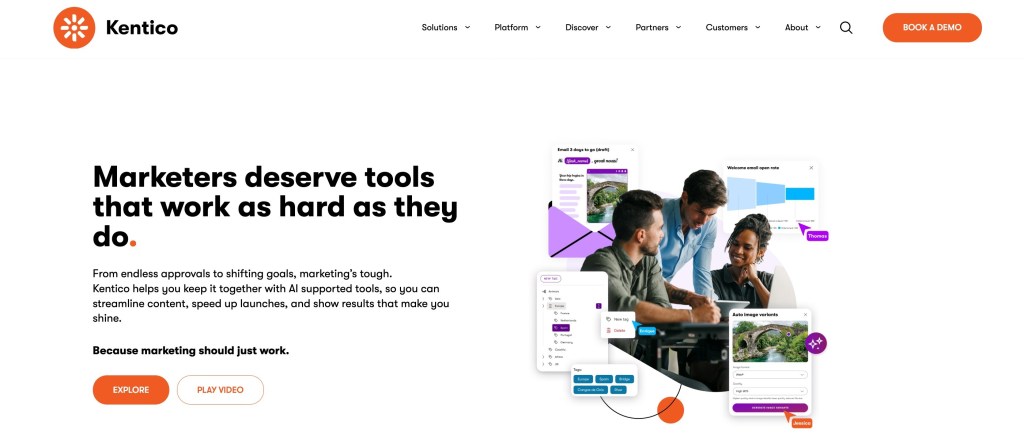
Kentico homepage
Kentico is an all-in-one digital experience platform that combines CMS, digital marketing, and e-commerce capabilities in a single solution.
Kentico bridges the gap between traditional CMS and headless architecture through its hybrid approach. Organizations can use page-based content management for simpler sites while leveraging headless delivery for mobile apps or custom front-ends – all from the same platform.
Kentico provides many of AEM’s enterprise features – email marketing, A/B testing, personalization – at a more accessible price point. For mid-market enterprises that need DXP functionality but can’t justify AEM’s investment, Kentico offers a compelling middle ground.
Some things to know about Kentico:
- Built-in marketing automation handles email campaigns, lead scoring, and contact management.
- Form builder capabilities address common AEM Forms use cases without additional licensing.
- .NET foundation appeals to enterprises with existing Microsoft infrastructure.
10. Bloomreach
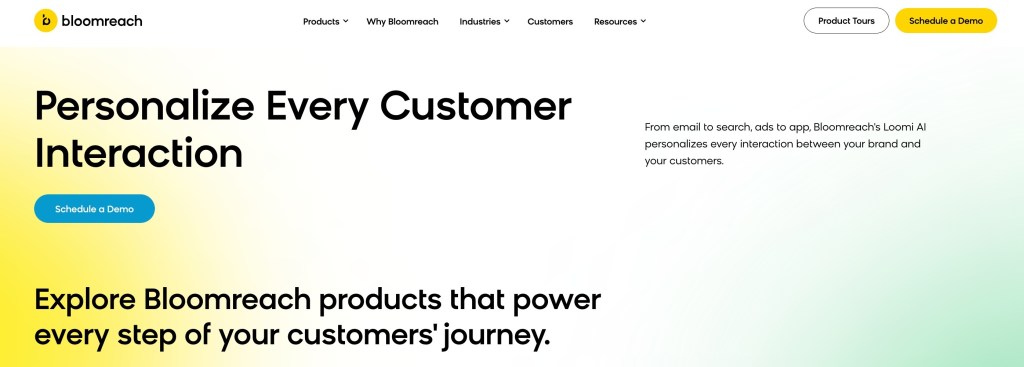
Bloomreach homepage
Bloomreach is a commerce experience platform that combines AI-powered search, merchandising, and content management to drive e-commerce conversions.
Where other DXPs treat commerce as an add-on, Bloomreach builds its entire platform around the buying journey. Its AI analyzes customer behavior in real time, automatically optimizing product discovery, search results, and content placement to maximize revenue.
For enterprises where e-commerce drives significant revenue, Bloomreach’s native commerce intelligence outpaces AEM’s more generalist approach. The platform’s machine learning models are specifically trained on retail data, delivering more relevant product recommendations than generic personalization engines.
Some things to know about Bloomreach:
- AI-powered site search understands natural language and shopper intent.
- Merchandising tools let teams automate product placement based on performance data.
- Headless architecture supports composable commerce implementations.
Seamless Migration to WordPress With Multidots Expertise
Numerous options exist for enterprises looking for a change. However, with so many to choose from, which one comes out on top?
The best AEM alternative depends on your specific needs. Headless platforms like Contentful, Storyblok, and Sanity suit organizations prioritizing omnichannel delivery. Enterprise DXPs like Sitecore, Kentico, and Bloomreach offer all-in-one functionality. But for most enterprises seeking the optimal balance of power, flexibility, and cost-effectiveness, WordPress stands out.
Looking closely at the options, WordPress is clearly the most effective CMS for most businesses, no matter the size. WordPress is open source, powerful, and highly customizable, not to mention that it has thousands of experts within one community.
If you’re worried about migrating your site to WordPress, don’t! Multidots is a leading WordPress development agency specializing in enterprise migrations. With our expertise, migrating from AEM to WordPress is easy without data loss and downtime.
If you’re considering a switch to WordPress and want to explore why it’s the best option for your enterprise, contact Multidots today!
FAQs
Several AEM alternatives include built-in form capabilities. Kentico and Sitecore both offer form builders with conditional logic, data validation, and CRM integration. For organizations with simpler requirements, WordPress plugins like Gravity Forms and WPForms provide sophisticated form functionality – including payment processing and workflow automation – at a fraction of AEM Forms’ cost.
Organizations primarily using AEM for digital asset management may find dedicated DAM platforms more cost-effective. Solutions like Bynder, Cloudinary, and Brandfolder focus exclusively on asset storage, organization, and distribution – often with superior media transformation capabilities. Many integrate seamlessly with the CMS platforms covered in this guide.
Bloomreach is purpose-built for commerce experiences, with AI-powered search and merchandising that directly impact conversion rates. Sitecore and Kentico also offer strong commerce integrations. For WordPress-based e-commerce, WooCommerce provides extensive functionality with lower total cost of ownership than AEM’s commerce modules.
Headless platforms like Contentful and Sanity focus on content delivery rather than native personalization. However, they integrate with specialized personalization tools (such as Dynamic Yield, Optimizely, or Ninetailed) that often exceed AEM’s built-in capabilities. This composable approach lets enterprises choose best-in-class solutions for each function.
A traditional CMS like AEM couples content storage with presentation templates – content and design are managed together. A headless CMS separates these layers entirely, storing content in a back-end system and delivering it via APIs to any front-end. This architecture gives development teams more flexibility but requires separate implementation of the presentation layer.
WordPress offers the most accessible migration path for enterprises leaving AEM, combining extensive customization options with a massive support ecosystem. Drupal provides greater technical flexibility for organizations with complex architectural requirements. Both eliminate AEM’s licensing fees while delivering enterprise-grade capabilities.