
From small beginnings as a blogging platform, WordPress has grown to meet the needs of businesses of all sizes. According to W3Techs, WordPress powers 39.5% of all websites as of October 2026, making it the world’s most widely used content management system (CMS). Yet enterprise decision-makers may still question whether it can meet their organization’s demanding security, performance, and scalability requirements.
The bottom line is, can WordPress meet your enterprise needs? Absolutely!
In this article, we’ll look at what enterprise WordPress is and how WordPress caters to enterprise-level organizations, including how it supports security, scales with business growth, and works with managed hosting solutions like WordPress VIP.
What Is Enterprise WordPress?
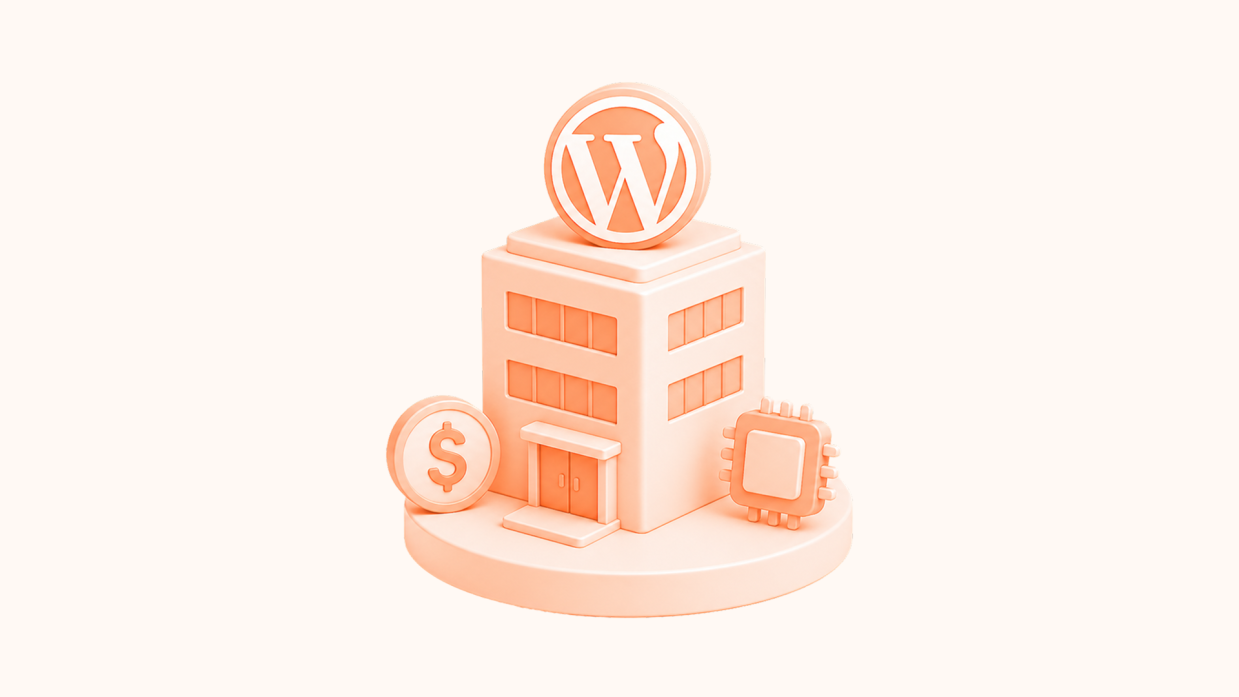
Enterprise WordPress is the same open-source WordPress core as a standard install, supported by the infrastructure, security, governance, and specialist services large organizations need.
Unlike a standard WordPress installation, which may be suitable for a single website or a small team, an enterprise setup must accommodate more complex requirements. A large organization might manage several brands, publish content across multiple regions, or have hundreds of employees working on its websites. Its CMS must support those operations without creating unnecessary work for editorial and technical teams.
The difference isn’t a separate version of WordPress. It’s how the platform is configured, hosted, managed, and integrated with the wider business.
Five areas distinguish an enterprise WordPress setup:
- Infrastructure: Managed hosting, such as WordPress VIP, provides the capacity and performance needed for high-traffic websites and demanding publishing operations.
- Security and compliance: Additional security controls, monitoring, and operational processes help organizations manage risk and meet applicable requirements.
- Editorial governance: Defined roles, permissions, and approval workflows help large teams manage content consistently across departments, brands, and regions.
- Integrations: Connections to CRM, analytics, marketing automation, and other business systems allow WordPress to work alongside existing enterprise technology.
- Support: Dedicated technical expertise, ongoing maintenance, and specialist support help organizations resolve issues and plan improvements.
These capabilities can be tailored to the organization’s size, technical requirements, and publishing needs. A multinational publisher, for example, will have different priorities from a corporate website serving customers across several markets.
The following sections explore these capabilities in more detail and explain why businesses choose WordPress for enterprise operations.
The Benefits of WordPress for Enterprise Operations
WordPress offers enterprises flexibility, scalability, integration capabilities, centralized website management, and tools that support efficient content publishing across large organizations.
Here’s an overview of its many advantages and core features, which make WordPress the preferred CMS for large-scale business operations.
User-Friendly Interface
WordPress has a straightforward dashboard that allows users with minimal technical expertise to manage content effectively. For example, thanks to the platform’s intuitive editor and media libraries, your marketing teams can create and launch their campaigns without relying on developers. The same goes for your content team when they need to upload or update articles.
Integration With Enterprise Systems
WordPress excels at enterprise-level because of its ability to integrate with other systems. Sales teams, for instance, can benefit from WordPress’s native integrations with platforms like Salesforce, ensuring that customer interactions and data flow freely between marketing content and sales databases.
Similarly, businesses can add eCommerce features to their WordPress CMS with WooCommerce or use Woo with WordPress as a standalone enterprise sales platform. Excellent native WordPress options exist in and beyond the WooCommerce ecosystem to manage physical product sales and inventory, digital downloads, memberships, subscriptions, and event tickets. There are plenty of high quality plugins available to extend WordPress even further, for example to add a searchable document library or resource database. WordPress integration with other eCommerce platforms is possible too.
Educational institutions can deploy a learning management system (LMS) like LearnDash with WordPress or integrate WordPress with Blackboard, Moodle, or Canvas sites to deliver courses and manage student enrollment.
Plus, WordPress’s integration with Mailchimp and other leading newsletter platforms can also streamline email marketing efforts, enabling businesses to synchronize subscriber lists and automate email campaigns.
These examples are only a fraction of the integration opportunities that WordPress offers!
SEO-Friendly Design
WordPress has comprehensive Search Engine Optimization (SEO) capabilities that help enterprises maintain high search visibility. With features like SEO-friendly URL structures and plugins such as Yoast SEO that guide content optimization, WordPress can be a powerful ally in driving organic traffic, a top priority for businesses seeking to expand their online footprint.
Customization at Its Core
With WordPress, customization possibilities are nearly endless. Enterprises can add custom functionality, connect the platform to their existing business systems, and shape it around the way their teams work.
The WordPress platform supports many plugins and themes that offer instant adaptability. A headless architecture provides another option by separating the front-end presentation from WordPress’s content management system. This allows developers to use different front-end technologies while editors continue managing content in WordPress. It can be useful for enterprises that need to publish across multiple digital channels or have specific front-end design and performance requirements. Explore these headless WordPress examples.
Larger customization projects often call for specialist support. Multidots is a leading enterprise WordPress agency that modernizes complex digital platforms – redesigns, builds, migrations, and replatforms – and tailors WordPress to each organization’s requirements. Learn more about custom WordPress development.
Robust Multisite Capabilities
WordPress allows you to manage multiple websites across a single namespace or many different domains, all within a single multisite network. This architecture is crucial for enterprises that require cohesive digital offerings across different brands, regions, territories, or service lines. Its centralized administration feature enables site network managers to allocate site-specific access to different teams, enhancing operational control and security.
Editorial Governance and Workflows
WordPress helps large editorial teams maintain control over who creates, reviews, approves, and publishes content.
- User roles and permissions: Built-in roles allow organizations to control who can write, edit, publish, and manage content.
- Review and approval workflows: Plugins or custom workflows can introduce additional approval stages before publication.
- Content locking and revision history: WordPress helps prevent simultaneous editing conflicts and lets editors review or restore earlier versions.
- Editorial collaboration: Multidots’s Multicollab plugin extends WordPress with Google Docs-style commenting and feedback directly in the editor.
- Audit trails: Activity logging plugins can record content changes and user actions, helping teams investigate issues and maintain accountability.
These controls are particularly useful when content passes between marketing, legal, compliance, and regional teams. Rather than relying on informal email approvals, enterprises can establish clearer publishing responsibilities and maintain oversight as their editorial operations grow.
Support for Compliance Standards
WordPress provides tools that can support enterprise compliance, but meeting regulatory requirements depends on how each website is built, hosted, and managed.
WordPress includes personal data export and erasure tools to help organizations respond to privacy requests under regulations such as GDPR. It also supports accessible website development, although meeting WCAG 2.1 AA depends on the theme, content, and implementation.
Security certifications and authorizations, such as SOC 2 and FedRAMP, apply to specific service providers and assessed environments, not WordPress itself. The security section below explains these responsibilities in more detail.
Scalable to Your Business Size
As enterprises evolve, so does WordPress, scaling to match your growth trajectory. From hosting plans that accommodate surges in traffic to plugin ecosystems that broaden functionality, WordPress ensures that advancements in your business are reflected through your digital presence. Upgrading technology stacks, expanding into new markets, and adding eCommerce capabilities are all easier to accomplish with WordPress.
Even with all its great features, having enterprise-grade hosting is essential to get the best out of WordPress. That is where WordPress VIP comes into the picture.
Why WordPress VIP Stands Out for Large Businesses
Counted on by leading global media companies, technology firms, and financial institutions, WordPress VIP is the gold standard for enterprise hosting solutions. It provides managed infrastructure, security controls, and technical support for organizations running high-traffic WordPress websites.
Let’s look at some of WordPress VIP’s features:
- Reliability: WordPress VIP uses infrastructure designed to handle traffic surges during major events, product launches, and sales promotions, helping websites maintain performance as demand increases.
- Security: WordPress VIP provides security monitoring, vulnerability management, and infrastructure controls for enterprises with demanding security requirements. It achieved FedRAMP Moderate Authorization to Operate (ATO) in 2025.
- Support: WordPress VIP provides 24/7 technical support, giving enterprise teams access to WordPress engineers when they need help resolving issues.
- Agency Partners: WordPress VIP works with specialist agencies that help enterprises develop, migrate, and maintain their websites. Multidots is a WordPress VIP Premier Partner.
For enterprises, this means WordPress’s flexibility comes with the infrastructure and support needed to run it at scale. Working with a specialist agency such as Multidots can help organizations plan and deliver more complex implementations, migrations, and ongoing improvements.
Do Large Enterprises Use WordPress?
Yes. Major publishers, media companies, and global businesses use WordPress to manage high-traffic websites, large content libraries, and complex publishing operations.
Enterprise WordPress isn’t limited to the relatively simple setups associated with smaller websites. Large organizations can combine WordPress with managed infrastructure, integrations, and editorial controls suited to their requirements.
According to W3Techs, WordPress powers 58.2% of websites with an identifiable CMS as of October 31, 2026. This demonstrates its widespread adoption, although market share alone doesn’t tell us how many enterprise organizations use it.
There are well-documented enterprise examples. TIME uses WordPress VIP for its digital publishing operations, including managing traffic surges around major news events. CNN Brasil uses the platform to support its newsroom and growing audience. Variety also appears in WordPress.org’s enterprise showcase.
These examples show that WordPress can support substantial publishing operations. Whether it’s suitable for a particular enterprise depends on its security requirements, editorial workflows, integrations, and the resources available to manage the platform.
Is WordPress Secure Enough for Enterprises?
Yes. WordPress can meet enterprise security requirements when hosting, updates, plugins, user permissions, and ongoing monitoring are properly managed.
The key distinction is between WordPress itself and how an enterprise operates it. Security depends on maintaining the platform, assessing third-party code, restricting access, and responding promptly to vulnerabilities.
According to Patchstack’s State of WordPress Security in 2026, researchers identified 11,334 vulnerabilities across the WordPress ecosystem in 2025, a 42% increase from 2024. Of these, 91% were found in plugins and 9% in themes, while just six low-priority vulnerabilities affected WordPress core.
These findings highlight the importance of managing third-party components rather than treating every WordPress installation as equally vulnerable. Regular updates, secure hosting, strong authentication, and carefully assigned user permissions all help reduce risk.
WordPress’s open-source development model also allows security researchers and contributors to identify and report vulnerabilities, supporting ongoing improvements to the platform.
Choosing a suitable hosting provider adds another layer of protection. For example, WordPress VIP provides security features such as:
- Proactive vulnerability and patch management.
- Regular security assessments, including penetration tests.
- Automated code and plugin scans.
- Use of Akismet for anti-spam.
- DDoS protection, firewalls, and secure communications.
- Two-factor authentication for privileged users by default.
Multidots further fortifies WordPress’s security architecture with multi-level software audits, evaluating every line of code for potential vulnerabilities. When Multidots selects secure and performant third-party plugins for use, its criteria are stringent, emphasizing regular updates, positive track records, and compatibility with enterprise infrastructures.
Multidots is also SOC 2 Type II compliant and certified to ISO 27001 and Cyber Essentials, providing independently assessed security controls and practices.
At Multidots, some essential security practices involve:
- Creating inviolable passwords and usernames.
- Enforcing Two-Factor Authentication (2FA).
- Implementing firewalls for enhanced protection.
- Establishing secure connections with Secure Sockets Layer (SSL) certificates.
Of course, there’s more to the process. Let’s look at how Multidots helps enterprise WordPress businesses.
How Multidots Helps Enterprises Run WordPress
Enterprise WordPress projects require more than a successful launch. Organizations need a platform that supports their publishing operations, integrates with existing systems, and remains reliable as business requirements change.
Multidots provides enterprise WordPress services, including website development, redesigns, migrations, and ongoing support. Multidots’s experience includes more than 1,000 migrations and 2.5 million pages moved with zero downtime.
The team works with enterprise clients from initial consultation and planning through development, testing, launch, and ongoing maintenance. The focus is on meeting each organization’s technical and operational requirements while reducing disruption to its business.
For a closer look at implementation, see our enterprise WordPress development guide. Organizations evaluating potential partners can also read our guide to choosing an enterprise WordPress agency.
Multidots Case Study: Sneaker News

Sneaker News, a digital publisher covering sneaker culture, needed a WordPress platform capable of supporting its growing audience and extensive content library. Its existing infrastructure was struggling to meet the demands of a high-traffic publishing operation.
Multidots rebuilt and scaled the company’s WordPress platform on WordPress VIP, introducing a headless architecture to improve content distribution and website performance. It also developed API integrations to synchronize content across the company’s digital properties and support its affiliate relationships.
The project delivered two measurable results:
- Content management: The new infrastructure supported more than 80,000 pieces of content, helping Sneaker News manage its extensive publishing library.
- Website performance: Page load time fell from 5 seconds to 1.2 seconds, improving the experience for readers accessing the website.
Sneaker News founder and editor-in-chief Yu-Ming Wu described the collaboration:
Managing our expansive content library was becoming an insurmountable task. That’s when we looked to Multidots for an ingenious and robust solution tailored to our unique circumstances. Partnering with them not only led to a fourfold increase in our business size but also offered an unparalleled edge in the competitive digital landscape


The project demonstrates how enterprise WordPress development can address publishing and performance challenges while supporting a media company’s growth.
Read the full Sneaker News case study for more details.
Take Your Enterprise WordPress Website to the Next Level With Multidots
Enterprise WordPress gives large organizations the flexibility to manage complex websites, support editorial teams, and connect their content with wider business systems. Getting the most from the platform, however, requires careful planning, technical expertise, and ongoing maintenance.
Multidots specializes in complex WordPress migrations and provides post-launch managed services to help enterprises maintain, secure, and improve their websites as their requirements evolve. Whether you’re moving from another CMS or updating an existing WordPress platform, the right technical partner can help you plan the work and manage its risks.
Talk to Multidots about your enterprise WordPress project.
Frequently Asked Questions
Enterprise WordPress costs vary depending on hosting, development requirements, integrations, security, and ongoing support. Projects are typically quoted individually because every organization has different needs. Our enterprise WordPress cost guide explains the main factors that influence the overall investment.
Adobe Experience Manager (AEM), Sitecore, and Drupal are established enterprise CMS options. AEM offers extensive content and digital experience capabilities, Sitecore focuses on content management and personalized digital experiences, while Drupal provides flexible content structures and permissions. WordPress can be a strong fit for organizations prioritizing editorial usability, extensibility, and publishing efficiency. Our Sitecore vs WordPress comparison looks at one of these choices in detail.
WordPress requires careful management of plugins, updates, and custom development. Too many overlapping plugins can increase maintenance and security risks, while complex websites need suitable hosting and clear editorial governance. Our enterprise WordPress development guide explores these implementation considerations.
WordPress is a content management system (CMS), not a customer relationship management (CRM) platform. It helps organizations create, manage, and publish digital content, while CRM systems manage customer information and interactions. WordPress can integrate with CRM platforms such as Salesforce, as explained in the Integration With Enterprise Systems section above.
References
- W3Techs
- WordPress
- WordPress VIP
- Salesforce
- WP VIP – Enterprise Commerce
- WooCommerce
- LearnDash
- Blackboard
- Moodle
- Canvas
- Mailchimp
- Yoast SEO
- General Data Protection Regulation (GDPR)
- ISO Security Standards
- WP VIP – Security
- CNN Brasil – WordPress VIP case study
- Variety
- Time
- Patchstack – State of WordPress Security in 2026
- Akismet
- Sneaker News
- Searchable Document Library